How to Build a High-Growth SaaS or FinTech Startup in Dubai (2026 Edition)

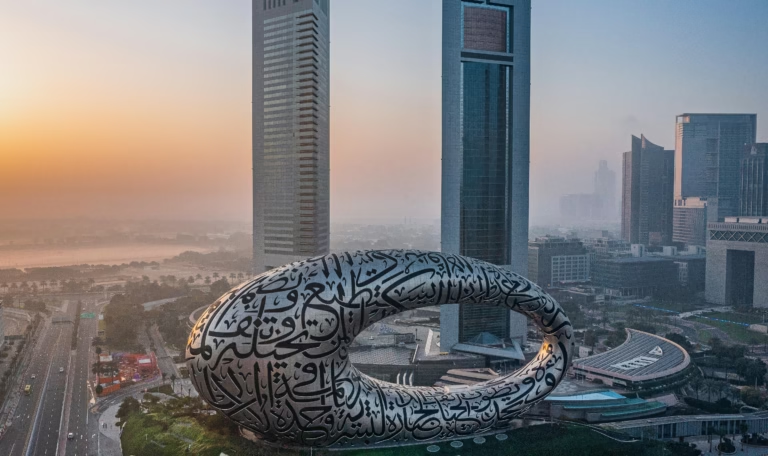
AI-Driven Innovation, Cashless Economy & Dubai’s Universal Blueprint for Artificial Intelligence Dubai’s Digital Leap: Why 2026 Is a Defining Year for SaaS & FinTech Dubai is no longer just a startup-friendly jurisdiction — in 2026, it is one of the world’s most digitally ambitious economies. The city has positioned itself at the intersection of artificial intelligence, financial innovation, and large-scale digital transformation, making it an ideal launchpad for SaaS, FinTech, and AI-driven startups. Through initiatives like the Dubai Universal Blueprint for Artificial Intelligence, the UAE government is actively embedding AI across public services, financial systems, infrastructure, and enterprise operations. At the same time, Dubai’s accelerated shift toward a cashless economy is fundamentally changing how payments, banking, lending, compliance, and financial services operate. At DubaiSetupNow, we work closely with SaaS founders and FinTech entrepreneurs who want to build scalable, investor-ready companies in Dubai. The startups that succeed are not just building good products — they are aligning their business model, licensing, compliance, and go-to-market strategy with Dubai’s long-term digital vision. Dubaisetupnow Dubai Universal Blueprint for Artificial Intelligence: A Growth Engine for Startups Dubai’s AI Blueprint is not a marketing document — it is a government-backed execution roadmap designed to integrate artificial intelligence into every layer of the economy. AI is being adopted across government services, finance, healthcare, logistics, real estate, retail, smart cities, and enterprise decision-making. For SaaS and FinTech startups, this creates real, immediate demand for AI-powered platforms such as: Automation and workflow SaaS tools Predictive analytics and data intelligence platforms AI-driven risk, fraud, and compliance engines Smart finance, RegTech, and GovTech solutions AI-enabled customer experience and decision systems Startups that align their product offerings with this AI-first ecosystem gain faster access to enterprise clients, government pilots, and strategic partnerships, giving them a significant growth advantage in 2026. Dubaisetupnow The Cashless Economy Shift: Why FinTech Is Exploding in Dubai Dubai’s transition toward a cashless, digital-first economy has accelerated rapidly. Government services, retail, transport, real estate, and even SME transactions are increasingly digital. This shift has unlocked massive opportunities for FinTech startups. In 2026, high-growth FinTech companies in Dubai are building: Digital payment gateways and merchant solutions that enable businesses to accept online and in-store payments seamlessly, integrate with POS systems, support multiple currencies, and comply with UAE regulations for fast, secure, and scalable transactions. Embedded finance and API-based banking products that allow non-financial platforms to offer payments, lending, cards, and financial services directly within their apps, powering SaaS, marketplaces, and super-app ecosystems across the UAE and GCC. Open banking and data-sharing platforms that securely connect banks, fintechs, and third-party providers, enabling real-time access to financial data, smarter credit scoring, personalized financial products, and regulatory-compliant data exchange. Digital wallets, BNPL, and lending tech that support cashless transactions, flexible consumer financing, instant credit decisions, and frictionless checkout experiences, aligning with Dubai’s fast-growing digital commerce and retail ecosystem. Blockchain-based settlement and remittance systems that reduce transaction costs, speed up cross-border payments, enhance transparency, and provide secure, decentralized alternatives for international transfers and digital asset settlement. Unlike many jurisdictions, Dubai’s regulators support innovation while enforcing clarity. For FinTech founders, this means innovation within a regulated, bankable environment — critical for long-term scale and investor confidence. Dubaisetupnow Structuring a SaaS or FinTech Startup in Dubai (What Founders Must Get Right) A high-growth startup in Dubai is built on correct structuring from day one. In 2026, success is no longer driven by product alone — it depends heavily on how well the business is licensed, regulated, and prepared to scale. Founders must carefully plan several critical elements at the setup stage, including: The right jurisdiction (free zone vs mainland), based on target markets, client base, regulatory exposure, and long-term expansion plans. The correct business activity and license type, ensuring alignment with actual operations, future pivots, and investor expectations. Regulatory exposure, especially for FinTech, SaaS handling financial data, or AI-driven platforms that may fall under sector-specific regulations. Corporate tax positioning, including eligibility for free zone benefits, qualifying income treatment, and long-term tax efficiency. Banking readiness, with clear business models, compliance documentation, and source-of-funds planning to avoid delays. Many startups fail or experience slow growth not because of weak products or lack of demand, but due to incorrect licensing, prolonged banking delays, or compliance gaps that block operations and fundraising. In Dubai’s 2026 ecosystem, structuring is as important as technology. At DubaiSetupNow, we help founders select startup-friendly free zones or mainland structures that are designed to support fundraising, rapid scaling, employee visas, and future regional or global expansion — ensuring your startup is built on a foundation that can grow with you. Dubaisetupnow Regulation, Compliance & Banking: The Startup Reality in 2026 In 2026, Dubai remains highly business-friendly — but it is firmly compliance-driven. SaaS and FinTech startups must be prepared to meet regulatory expectations from day one, especially as they scale and engage with banks, investors, and enterprise clients. AML & KYC expectations, requiring startups to implement strong customer due diligence processes, transaction monitoring systems, and internal compliance controls that align with UAE and international standards. Corporate tax registration and filings, including timely registration, accurate classification of income, and regular tax submissions to remain fully compliant and avoid penalties. Proper accounting and audits (where applicable), ensuring financial transparency, investor readiness, and alignment with regulatory and banking requirements, particularly for FinTech and revenue-generating SaaS platforms. Clear source-of-funds documentation for banking, with well-documented capital origins, ownership structures, and transaction flows to meet increasingly strict bank due diligence standards. Banking remains one of the biggest bottlenecks for FinTech startups globally. In Dubai, founders who plan banking alongside licensing and compliance — rather than as an afterthought — benefit from faster approvals, stronger banking relationships, and long-term operational stability. Dubaisetupnow Why Dubai Is Ideal for Scaling SaaS & FinTech Globally Dubai is uniquely positioned for startups that want to scale beyond one market. From a single base, founders can serve: The UAE market The wider GCC Africa, South Asia, and Europe Combined with zero personal income tax, strong IP protection,..

Why Dubai Is Becoming the Global Headquarters Capital in 2026

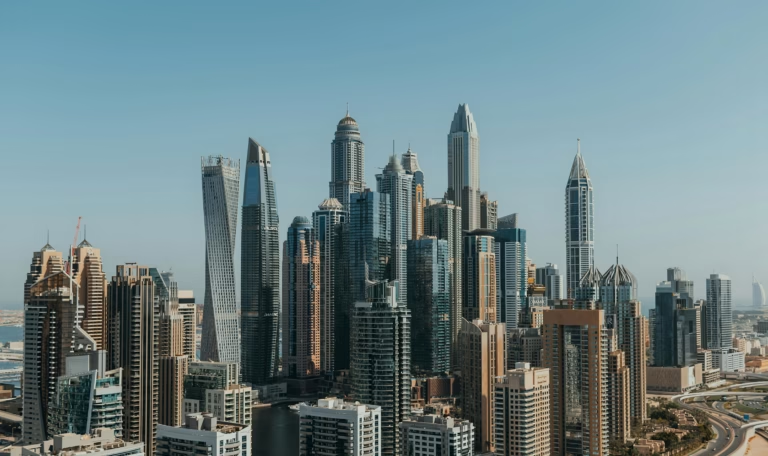
A Global Shift in Where Companies Base Their Leadership In recent years, Dubai has rapidly evolved from a regional business hub into a true global headquarters destination for multinational corporations, high-growth startups, family offices, and international founders. By 2026, this shift is no longer a passing trend — it has become a strategic decision driven by regulatory clarity, economic stability, geopolitical neutrality, and long-term business efficiency. Companies are increasingly choosing Dubai as the place where key decisions are made, leadership teams are based, and global strategies are executed. At DubaiSetupNow, we work closely with founders, C-suite executives, and global businesses that are relocating or establishing their headquarters in Dubai. What we consistently see is a change in mindset: companies are no longer choosing Dubai merely to “enter the Middle East market.” Instead, they are positioning Dubai as the central command hub for global operations, overseeing regional markets, international subsidiaries, cross-border trade, and strategic leadership from a single, well-structured base. Why Companies Are Moving Headquarters to Dubai Global businesses are increasingly rethinking traditional headquarters locations as they face rising corporate and personal taxes, regulatory uncertainty, political instability, and escalating operational costs in many established business hubs. In contrast, Dubai offers a predictable, stable, and pro-business environment, supported by clear laws, efficient governance, and policies specifically designed to attract and retain long-term corporate headquarters rather than short-term operations. Through our work at DubaiSetupNow, we see companies consistently choosing Dubai for its zero personal income tax, competitive and well-defined corporate tax framework, strong investor and shareholder protection, transparent compliance systems, and government-backed economic vision. For global leadership teams and decision-makers, Dubai provides something increasingly rare in today’s business climate: efficiency, certainty, and control — allowing companies to focus on growth, strategy, and global expansion without unnecessary disruption. Dubaisetupnow Dubai’s Strategic Advantage for Global HQ Operations Central global location connecting Asia, Europe, and Africa, enabling companies to manage regional and international markets from a single headquarters. This positioning reduces operational complexity and allows leadership teams to stay close to key global trade routes and emerging markets. World-class air and sea connectivity, anchored by Dubai International Airport and Jebel Ali Port, which provide unmatched access for executive travel, cargo movement, and international logistics. This infrastructure supports fast decision-making, frequent global engagement, and seamless cross-border operations. Time-zone efficiency that allows leadership teams to communicate with Asia in the morning, Europe in the afternoon, and North America in the evening — making Dubai one of the most efficient locations in the world for managing global operations within a single working day. Advanced digital and telecommunications infrastructure, supporting cloud-based operations, remote leadership, secure data management, and real-time collaboration across international offices and teams. Headquarters-friendly legal and corporate framework, offering flexible company structures, modern corporate laws, and regulatory clarity that support global governance, board-level decision-making, and international expansion strategies. Executive-focused visa and residency options, including long-term residency and investor visas designed to attract founders, board members, and senior leadership, allowing companies to relocate key decision-makers with ease and stability. Dubaisetupnow Why 2026 Is the Turning Point In 2026, Dubai offers something that has become increasingly rare in the global business landscape: certainty. Corporate tax laws are now clearly defined, compliance requirements are transparent and predictable, and banking frameworks have matured into stable, well-regulated systems. For global businesses and leadership teams, this clarity removes guesswork and allows for confident long-term planning. At DubaiSetupNow, we help companies structure their headquarters in a way that strategically aligns tax efficiency, regulatory compliance, banking readiness, and executive mobility. Businesses that plan their HQ relocation properly in 2026 are not merely reducing costs — they are future-proofing their global operations, strengthening investor confidence, and building leadership structures designed to scale across markets with stability and control. Dubaisetupnow How DubaiSetupNow Supports HQ Relocation Relocating or setting up a global headquarters requires far more than basic company registration. At DubaiSetupNow, we provide end-to-end strategic support to ensure your headquarters is structured for efficiency, compliance, and long-term global growth. Structuring the optimal HQ entity (mainland or free zone) by analyzing your operational model, leadership structure, target markets, and tax exposure to determine the most suitable jurisdiction for headquarters operations. Aligning corporate tax strategy with real business operations, ensuring your HQ setup is compliant with UAE corporate tax laws while remaining tax-efficient and scalable as the business grows. Managing executive visas and residency, including investor visas and long-term residency options, to enable founders, board members, and senior leadership to relocate smoothly and operate without disruption. Ensuring banking, compliance, and regulatory readiness, so your headquarters can open corporate bank accounts, meet AML/KYC requirements, and operate confidently within Dubai’s regulatory framework. Supporting long-term scaling and regional expansion, helping your headquarters structure adapt as you add new markets, subsidiaries, leadership teams, and regional operations across the UAE, GCC, and beyond. Dubaisetupnow Final Thought Dubai in 2026 is not just a place to do business — it is where global businesses choose to lead, scale, and make strategic decisions from.  Contact DubaiSetupNow today to structure your Dubai headquarters with clarity, compliance, and confidence — and build a leadership base designed for long-term global success.

Dubai Business Setup in 2026: What Changed, What Stayed & What You Must Know

Dubai has long stood out as one of the world’s most powerful and business-friendly destinations for entrepreneurs, investors, and global enterprises. With its strategic location connecting Asia, Europe, and Africa, a pro-business regulatory ecosystem, and forward-thinking government policies, Dubai continues to attract startups, SMEs, and multinational companies looking to establish and scale their presence internationally. As we move into 2026, Dubai’s business landscape has not become more complicated — it has become clearer, more structured, and more sustainable. Regulatory frameworks around corporate tax, compliance, banking due diligence, and licensing have matured, offering greater transparency, stronger investor protection, and long-term stability. These changes are designed to support serious businesses that are built to last — not short-term setups. At DubaiSetupNow, we help founders and companies navigate these changes with confidence. For anyone planning a business setup in Dubai in 2026, understanding what has changed, what has stayed the same, and what now matters most is critical to success. The right decisions at the setup stage directly impact tax efficiency, banking approvals, visa eligibility, compliance obligations, and future scalability. This guide breaks everything down in a simple, practical, and confusion-free way, ensuring your Dubai business journey starts on the right foundation — with clarity, compliance, and long-term growth in mind. What Changed in Dubai Business Setup by 2026 One of the biggest reasons businesses struggle or fail early in Dubai is choosing the wrong business structure during company setup. Many founders select a mainland, free zone, or offshore company based purely on cost, speed, or hearsay — without understanding how this decision affects corporate tax exposure, corporate banking approvals, visa eligibility, operational flexibility, and long-term scalability. In 2026, business structure directly impacts how much tax you pay, whether banks approve your account, how easily you can hire staff, and whether your business can legally operate as intended. Companies that later discover their structure restricts their activities or increases compliance costs often face expensive restructuring, re-licensing, or complete shutdowns. Choosing the right structure from day one is critical for survival beyond Year 1. Dubaisetupnow 1. Wrong Business Structure from Day One The biggest shift in recent years has been Dubai’s transition toward a more structured, compliance-driven, and globally aligned business environment. This evolution is not about adding complexity — it’s about creating clarity, long-term stability, and investor confidence. Dubai has moved from being seen purely as a fast setup destination to a jurisdiction that rewards well-planned, compliant, and sustainable businesses. One of the most significant changes is the introduction and stabilization of UAE Corporate Tax. While Dubai remains one of the most tax-efficient jurisdictions in the world, businesses in 2026 must now register for corporate tax, maintain proper accounting records, and file annual tax returns. Free zone companies may still legally benefit from 0% corporate tax on qualifying income, but only if they are correctly structured, operate within permitted activities, and meet compliance conditions. Tax planning is no longer an afterthought — it is now a core part of the business setup strategy. Another major shift is the tightening of compliance and transparency requirements. Authorities now place much stronger emphasis on Ultimate Beneficial Ownership (UBO) disclosures, AML and KYC checks, accurate business activity selection, and ongoing regulatory reporting. While this has increased scrutiny during licensing and bank account opening, it has also strengthened Dubai’s global reputation, making it a more trusted base for international trade, investment, and headquarters operations. Corporate banking has also become more selective and structured. In 2026, UAE banks expect businesses to present clear and logical business models, well-documented sources of funds, and compliance-ready corporate structures. Although this can mean longer approval timelines, it has significantly improved the quality, stability, and reliability of Dubai’s financial ecosystem. Businesses that plan banking alongside licensing and compliance now enjoy smoother operations and stronger long-term banking relationships. Dubaisetupnow What Stayed the Same (And Still Makes Dubai Powerful) Corporate Tax Is Now Standard Corporate tax is now a permanent and unavoidable part of business planning in Dubai. In 2026, all companies are required to register for UAE Corporate Tax, maintain proper accounting records, and file annual tax returns. While free zone businesses can still legally benefit from 0% corporate tax on qualifying income, this advantage is only available when the company is correctly structured, operates within approved activities, and meets all compliance conditions. Tax planning is no longer optional — it must be integrated into the business setup strategy from day one. Stricter Compliance & Transparency Compliance and transparency requirements have tightened significantly across all Dubai jurisdictions. Authorities now strictly enforce Ultimate Beneficial Ownership (UBO) disclosures, AML and KYC compliance, accurate business activity selection, and ongoing regulatory reporting. This increased scrutiny affects licensing, renewals, and corporate banking. While it requires better preparation, it has also strengthened Dubai’s position as a globally trusted and investor-friendly business hub. Tighter Licensing Scrutiny Business license approvals in 2026 are far more detailed and closely reviewed than in the past. Licensing authorities actively cross-check business activities, company descriptions, ownership structures, and submitted documentation. Any mismatch, vague information, or incorrect setup can result in delays, resubmissions, or rejection. Precision and accuracy at the licensing stage are now essential for fast approvals, operational freedom, and long-term scalability. More Selective Corporate Banking Corporate banking in Dubai has become more selective and risk-focused. UAE banks now require clear business models, documented sources of funds, transparent ownership structures, and compliance-ready operations before approving accounts. Although this may lead to longer approval timelines, it has improved the overall quality, stability, and reliability of banking relationships. Businesses that plan banking alongside licensing and compliance benefit from smoother operations and fewer disruptions. Dubaisetupnow What You Must Know Before Setting Up in 2026 In 2026, success in Dubai business setup depends less on speed and more on correct planning. Choosing the right jurisdiction (mainland vs free zone vs offshore) is more important than ever, as it directly impacts tax exposure, banking approvals, visa eligibility, and scalability. A wrong choice may not fail immediately — but it often creates..

Why Some Dubai Businesses Fail in Year 1 (2026 Analysis)

Dubai businesses fail in year 1 most commonly due to poor financial planning, licensing missteps, and misunderstanding regulatory requirements. Dubai has firmly positioned itself as one of the most crypto-friendly and regulation-driven jurisdictions in the world, making it a preferred destination for cryptocurrency business setup in Dubai, blockchain company registration, and virtual asset service providers (VASPs). While many countries continue to struggle with unclear crypto laws and regulatory uncertainty, Dubai has taken a confident lead by establishing a dedicated legal framework for virtual assets, supported by clear VARA regulations, robust compliance standards, and investor-focused policies for the crypto and Web3 ecosystem. As we move into 2026, Dubai is no longer just a “crypto-friendly” city — it has evolved into a global headquarters hub for Web3 companies, blockchain startups, and digital asset businesses. From crypto exchanges, NFT marketplaces, and DeFi platforms to blockchain developers, Web3 consultancies, tokenization projects, and digital asset custody providers, thousands of international companies are choosing Dubai for one core reason: regulatory clarity combined with scalability and global market access. Supported by crypto-friendly free zones, advanced fintech infrastructure, and strong AML and KYC compliance systems, Dubai offers one of the safest and most future-ready environments for crypto entrepreneurs. This guide covers everything you need to know about crypto and virtual asset business setup in Dubai in 2026, including VARA licensing requirements, types of crypto licenses in the UAE, free zone vs mainland options, corporate tax implications for crypto businesses, and ongoing compliance obligations. Whether you are planning to launch a crypto exchange, NFT business, blockchain development firm, Web3 platform, or virtual asset consultancy, this guide will help you understand how to set up, operate, and scale your crypto business in the UAE — legally, compliantly, and profitably. Dubai is often described as one of the easiest and fastest places in the world to start a business — and that reputation is well earned. With quick company formation, 100% foreign ownership, zero personal income tax, a business-friendly regulatory environment, and direct access to global markets, thousands of entrepreneurs, startups, and international companies launch businesses in Dubai every year. Yet despite these powerful advantages, a surprising number of Dubai businesses fail within their first 12 months of operation. The reason is not a lack of opportunity, demand, or market potential.The real reason lies in poor planning, incorrect setup decisions, weak structuring, and a misunderstanding of how Dubai’s business ecosystem actually functions in 2026 — especially around compliance, banking, tax, and market entry. This analysis breaks down the real, often overlooked reasons why businesses fail in their first year in Dubai, and more importantly, explains how informed founders and investors avoid these mistakes and build businesses that survive, stabilize, and scale. Dubaisetupnow 1. Wrong Business Structure from Day One One of the biggest reasons businesses struggle or fail early in Dubai is choosing the wrong business structure during company setup. Many founders select a mainland, free zone, or offshore company based purely on cost, speed, or hearsay — without understanding how this decision affects corporate tax exposure, corporate banking approvals, visa eligibility, operational flexibility, and long-term scalability. In 2026, business structure directly impacts how much tax you pay, whether banks approve your account, how easily you can hire staff, and whether your business can legally operate as intended. Companies that later discover their structure restricts their activities or increases compliance costs often face expensive restructuring, re-licensing, or complete shutdowns. Choosing the right structure from day one is critical for survival beyond Year 1. Dubaisetupnow 2. Poor Market Understanding (Dubai Is Not “One Market”) Dubai is not a single, uniform market — and treating it like one is a common mistake. It is a complex mix of local UAE consumers, GCC regional markets, international trading hubs, and high-net-worth expatriate segments, each with different buying behaviors and expectations. Many businesses fail because founders assume what worked in their home country will work the same way in Dubai. In reality, pricing models, decision cycles, trust factors, partnerships, and customer acquisition strategies are very different. Businesses that fail to localize their offering, messaging, and sales strategy struggle to gain traction and burn capital quickly. Dubaisetupnow 3. Banking Delays That Kill Momentum One of the most underestimated reasons businesses fail in their first year is corporate banking delays. Many companies successfully obtain a business license but cannot operate because they do not have a functional UAE corporate bank account. In 2026, UAE banks apply strict due diligence and require clear business models, strong compliance documentation, transparent source of funds, and accurate activity alignment. Without proper preparation, businesses can remain stuck for months, paying rent, visas, and expenses with zero revenue coming in. Banking delays often destroy early momentum and cash flow. Dubaisetupnow 4. Underestimating Compliance, Tax & Reporting Dubai is business-friendly — but it is not compliance-free. Many businesses fail because founders underestimate or completely ignore ongoing obligations such as UAE corporate tax registration, accounting and audit requirements, VAT compliance, UBO filings, and regulatory reporting. In 2026, authorities actively monitor compliance, and issues often surface within the first year. Penalties, blocked bank accounts, license suspensions, or regulatory notices can quickly cripple a business. Compliance is no longer optional — it is a core operating requirement for any business that wants to survive in Dubai. Dubaisetupnow 5. Cash Flow Mismanagement Dubai is fast-moving, competitive, and cash-intensive. Rent, visas, marketing, staffing, software, and operations add up quickly, and many founders underestimate how long it takes to break even. Most businesses fail not because they are unprofitable, but because they run out of cash before profitability. Poor budgeting, unrealistic revenue timelines, and lack of working capital are silent killers in the first year. Strong cash flow planning is essential to survive the initial growth phase. Dubaisetupnow 6. Overpaying for Setup & Operations Another common mistake is overpaying for business setup and operations. Many founders lock themselves into expensive office leases, oversized license packages, unnecessary visas, or premium services that do not match their business stage. High fixed costs..

Mistakes That Get Business Licenses Rejected in Dubai (2026 Edition)

A business license rejected in Dubai can delay operations, increase costs, and damage expansion plans if compliance requirements are not properly addressed. Dubai remains one of the easiest and fastest destinations for business setup in the UAE, but business license rejection in Dubai is far more common than most entrepreneurs expect. In 2026, with tighter compliance requirements, updated UAE corporate tax frameworks, stricter corporate banking checks, and enhanced KYC and AML regulations, even small errors during company formation can lead to license delays, application rejections, or forced restructuring. Every year, thousands of investors apply for Dubai mainland licenses, free zone company registrations, and offshore business setups, and many face rejection not because their business idea lacks potential, but because the company setup process is handled incorrectly. Choosing the wrong jurisdiction, business activity, or ownership structure can immediately trigger regulatory concerns. Whether you are setting up a DED mainland company, a free zone business, or an offshore entity, understanding and avoiding these mistakes is critical to achieving smooth license approval, banking acceptance, and long-term compliance. Below, we break down the most common mistakes that get business licenses rejected in Dubai in 2026 — and explain how to avoid them to ensure your company formation in Dubai is approved quickly, compliantly, and without unnecessary costs. 1. Choosing the Wrong Business Activity One of the most common reasons for business license rejection in Dubai is selecting the wrong business activity during company formation. Dubai offers thousands of approved mainland and free zone activities, and each activity comes with its own regulatory conditions, approval requirements, operational limitations, and compliance obligations. Many entrepreneurs select activities that sound similar but do not accurately reflect their actual business operations, which immediately raises red flags with licensing authorities. In 2026, authorities carefully cross-check your selected activity against your business description, application documents, ownership structure, and even your corporate banking plan. Any mismatch between what your company is licensed to do and what it actually intends to do can result in license rejection, resubmission requests, or additional regulatory scrutiny. Choosing the correct activity from the start is critical not only for fast license approval, but also for long-term compliance, smooth banking, visa eligibility, and future business expansion in Dubai. Dubaisetupnow 2. Applying in the Wrong Jurisdiction (Mainland vs Free Zone vs Offshore) Another major reason for business license rejection in Dubai is applying in the wrong jurisdiction. Dubai offers multiple setup options — DED Mainland, Free Zones, and Offshore structures — and each one is designed for specific business models. Many entrepreneurs choose a jurisdiction based on cost or speed without understanding whether it actually supports their business activity, target market, visa needs, or operational scope. In 2026, authorities closely assess whether your chosen jurisdiction aligns with how and where you plan to operate. For example, applying for a free zone license while planning to trade directly in the UAE mainland, or choosing an offshore company when visas or physical operations are required, often leads to rejection or forced restructuring. Selecting the correct jurisdiction is critical for license approval, regulatory compliance, corporate banking acceptance, and long-term scalability of your Dubai business. Dubaisetupnow 3. Incomplete or Incorrect Documentation Submitting incomplete, inconsistent, or incorrect documentation is one of the fastest ways to get your business license rejected in Dubai. Company formation requires precise paperwork, including passport copies, visa details, shareholder information, business plans, declarations, and beneficial ownership disclosures. Even small errors — such as mismatched names, expired passports, or incorrect signatures — can delay or completely block approval. With stricter AML, KYC, and compliance checks in 2026, authorities now verify documents more thoroughly than ever before. Any inconsistency between submitted documents and your application details can trigger additional scrutiny or outright rejection. Ensuring accurate, complete, and properly prepared documentation is essential for smooth license issuance, faster approvals, and hassle-free banking and visa processing. Dubaisetupnow 4. Trade Name Violations and Naming Rule Errors Trade name rejection is a very common reason for business license rejection in Dubai, especially in 2026 where naming regulations are enforced more strictly. Many applicants choose business names that include restricted words, misleading terms, religious references, political expressions, or abbreviations that are not permitted under UAE commercial naming laws. Others select names that are already registered or too similar to existing companies, which leads to immediate rejection. In addition, the trade name must clearly align with the licensed business activity and legal structure. A mismatch between the trade name and activity can raise compliance concerns and delay approvals. Choosing a compliant, activity-aligned, and legally acceptable trade name is essential for fast license approval, trademark safety, and long-term brand protection in Dubai. Dubaisetupnow 5. Incorrect Shareholding or Ownership Structure Another major cause of license rejection is an incorrect or unclear ownership structure. This includes improper shareholder details, incorrect shareholding ratios, missing partner documents, or attempting ownership structures that are not permitted for certain activities or jurisdictions. In 2026, Dubai authorities place strong emphasis on ultimate beneficial ownership (UBO) transparency. If ownership details are inconsistent, incomplete, or non-compliant, applications may be rejected or sent back for restructuring. Proper ownership planning is critical not only for license approval, but also for corporate banking, tax compliance, and regulatory reporting. A clear, compliant ownership structure ensures smoother approvals and future scalability. Dubaisetupnow 6. Ignoring External Approvals and Regulatory Requirements Many business activities in Dubai require additional approvals from external authorities before a license can be issued. Common examples include professional services, education, healthcare, finance, crypto, media, and consulting activities. Applying without understanding or preparing for these regulatory requirements often leads to license rejection or indefinite delays. In 2026, regulators expect businesses to demonstrate awareness of compliance obligations at the application stage. Ignoring sector-specific approvals signals lack of preparedness and increases regulatory risk. Identifying and securing the required external approvals early is essential for smooth licensing, legal operations, and regulatory credibility. Dubaisetupnow 7. Vague or Unrealistic Business Descriptions Providing a vague, overly broad, or unrealistic business description is another common reason licenses get..

Crypto & Virtual Asset Business Setup in Dubai 2026: VARA, Licenses & Compliance

Crypto business setup in Dubai requires compliance with VARA regulations, proper licensing, and adherence to UAE virtual asset laws. Dubai has firmly positioned itself as one of the most crypto-friendly and regulation-driven jurisdictions in the world, making it a preferred destination for cryptocurrency business setup in Dubai, blockchain company registration, and virtual asset service providers (VASPs). While many countries continue to struggle with unclear crypto laws and regulatory uncertainty, Dubai has taken a confident lead by establishing a dedicated legal framework for virtual assets, supported by clear VARA regulations, robust compliance standards, and investor-focused policies for the crypto and Web3 ecosystem. As we move into 2026, Dubai is no longer just a “crypto-friendly” city — it has evolved into a global headquarters hub for Web3 companies, blockchain startups, and digital asset businesses. From crypto exchanges, NFT marketplaces, and DeFi platforms to blockchain developers, Web3 consultancies, tokenization projects, and digital asset custody providers, thousands of international companies are choosing Dubai for one core reason: regulatory clarity combined with scalability and global market access. Supported by crypto-friendly free zones, advanced fintech infrastructure, and strong AML and KYC compliance systems, Dubai offers one of the safest and most future-ready environments for crypto entrepreneurs. This guide covers everything you need to know about crypto and virtual asset business setup in Dubai in 2026, including VARA licensing requirements, types of crypto licenses in the UAE, free zone vs mainland options, corporate tax implications for crypto businesses, and ongoing compliance obligations. Whether you are planning to launch a crypto exchange, NFT business, blockchain development firm, Web3 platform, or virtual asset consultancy, this guide will help you understand how to set up, operate, and scale your crypto business in the UAE — legally, compliantly, and profitably. Why Dubai Is a Global Leader in Crypto & Virtual Assets Dubai’s rise as a global crypto powerhouse is no coincidence — it is the direct result of proactive government vision, forward-thinking regulation, and a clear legal framework for digital assets. While many jurisdictions either over-restrict innovation or leave crypto under-regulated, Dubai has struck the perfect balance by creating a controlled yet innovation-friendly ecosystem for cryptocurrency businesses, blockchain companies, and virtual asset service providers (VASPs). In 2026, crypto founders and global Web3 companies choose Dubai for several compelling reasons: Fully legal and VARA-regulated crypto licensing, offering long-term legitimacy Zero personal income tax, maximizing founder and investor returns Strong investor protection and regulatory clarity, critical for institutional trust Access to global capital, venture funds, and institutional investors World-class infrastructure and a deep international talent pool Government-backed Web3, blockchain, and metaverse initiatives driving innovation Most importantly, Dubai offers something extremely rare in the global crypto landscape: freedom to innovate backed by clear regulation. This unique combination makes Dubai not just a crypto-friendly destination, but one of the safest, most scalable, and future-ready jurisdictions in the world for crypto and virtual asset businesses. Dubaisetupnow What Is VARA and Why It Matters in 2026 Dubai regulates all crypto and virtual asset activities through the Virtual Assets Regulatory Authority (VARA) — the world’s first independent authority created exclusively to govern virtual assets. VARA is responsible for licensing, supervising, and regulating the entire crypto ecosystem in Dubai, including crypto exchanges, virtual asset brokers and dealers, custody providers, NFT marketplaces, token issuers, DeFi platforms, Web3 businesses, and crypto advisory firms. Its role is to ensure transparency, investor protection, operational integrity, and full compliance with global AML and KYC standards. As of 2026, no crypto or virtual asset business can legally operate in Dubai without being aligned with VARA regulations. This level of regulatory clarity is exactly what sets Dubai apart from loosely regulated or uncertain jurisdictions. For institutional investors, global exchanges, and serious founders, VARA provides confidence, legal certainty, and long-term stability — making Dubai one of the safest and most credible destinations in the world for launching and scaling crypto and virtual asset businesses. Dubaisetupnow Crypto & Virtual Asset License Types in Dubai (2026) Depending on your business model and the nature of your crypto operations, Dubai offers multiple crypto and virtual asset license categories, typically issued through approved free zones and fully aligned with VARA regulations. Selecting the right license is critical, as each category comes with different capital requirements, compliance obligations, risk assessments, and approval timelines. Common crypto and virtual asset license types in Dubai include: Crypto Exchange License – Designed for businesses operating centralized or decentralized trading platforms, including spot trading, derivatives, and order-matching systems. This license is suitable for exchanges catering to retail or institutional users and requires the highest level of regulatory scrutiny, capital adequacy, cybersecurity controls, and ongoing reporting. Virtual Asset Broker-Dealer License – Ideal for intermediaries that facilitate crypto transactions without directly operating an exchange. This includes OTC desks, brokerage platforms, and firms acting as agents between buyers and sellers. Compliance requirements focus heavily on AML, KYC, transaction monitoring, and transparency. Custody License – Required for companies that hold, safeguard, or manage digital assets on behalf of clients. Custodians must demonstrate strong cybersecurity frameworks, cold and hot wallet management systems, asset segregation, and insurance or risk-mitigation measures. NFT & Token Platform License – Suitable for businesses involved in minting, issuing, trading, or managing NFTs, utility tokens, or digital collectibles. This includes NFT marketplaces, tokenization platforms, and digital asset issuance projects, all of which must comply with VARA’s consumer protection and disclosure rules. Blockchain Development License – Designed for Web3 companies focused on blockchain protocol development, smart contract engineering, decentralized applications (dApps), infrastructure tools, and backend technology solutions. This license is often preferred by Web3 studios, SaaS blockchain platforms, and infrastructure providers. Crypto Consultancy License – Intended for advisory firms offering crypto-related consulting, research, compliance support, strategy development, or education services. While this license does not allow handling client funds, it still requires VARA alignment, professional qualification standards, and clear service scope definitions. Each of these licenses differs in regulatory complexity, approval timelines, capital thresholds, and compliance intensity, which is why choosing the correct category from the start is essential..

Why More Global Companies Are Moving Headquarters to Dubai

Dubai: The New Global Headquarters Capital A High-Impact Blog for DubaiSetupNow Global companies are moving to Dubai are reshaping the region’s business landscape, driven by tax efficiency, strategic geography, and a pro-business regulatory environment. In just ten years — especially over the past several years — Dubai has quickly become one of the top worldwide headquarters for businesses. Previously, it was viewed as a regional hub for commerce; today, it is viewed as the strategic command center for businesses that operate globally (some have operated solely in Dubai). Because of its ease of doing business, government policies that promote investments, a highly developed infrastructure, and a large number of tax incentives, it has become the central location for modern-day global business. Whether you are a company that is in the Fortune 500 looking to expand into new markets, a high-growth tech startup that wants to grow internationally, or a family-owned business that is ready to grow internationally, there’s a good chance that Dubai will provide your business with a solid foundation for its future. The best part? This trend is not slowing down; it is increasing in speed at a never before seen rate. The sections below will outline some of the major benefits as to why so many businesses are choosing to relocate their headquarters to Dubai — and why your company may want to consider doing the same. 1. Zero Tax Advantages That Attract Global Businesses For decades, Dubai has built a global reputation as one of the most tax-efficient business environments in the world, and that continues to be a major magnet for global companies. With 0% personal income tax, zero tax on capital gains and dividends, and full repatriation of profits, businesses operating in Dubai enjoy an unparalleled level of financial freedom and profitability. This tax landscape not only boosts operational efficiency but also attracts CEOs, founders, and top talent who want to maximize their earnings in a stable, business-friendly environment. Even with the UAE’s introduction of corporate tax, Dubai remains one of the most attractive and strategic headquarters destinations globally. Many free zones still provide compliant tax optimization pathways that allow companies to benefit from reduced or zero-tax structures, ensuring long-term financial sustainability. For multinational corporations and fast-growing enterprises, Dubai offers a rare combination of tax efficiency, legal clarity, and investor confidence — making it a smart choice for global expansion. Dubaisetupnow 2. A Perfect Geographical Location for Global Operations Dubai’s strategic geographic position between the East and West has made it one of the most valuable global gateways for international business. Companies headquartered in Dubai gain immediate access to major markets across Africa, Asia, and Europe, supported by world-class logistics networks and seamless global connectivity. With over 200 international flight routes operating from Dubai International Airport and unmatched air cargo capacity, businesses can move people, products, and resources faster and more efficiently than almost anywhere else in the world. Adding to this advantage is the presence of Jebel Ali Port, one of the largest and busiest seaports on the planet, giving companies the ability to manage global supply chains with exceptional reliability. This combination of air, sea, and land connectivity allows organizations to oversee regional operations, expand into new markets, and coordinate international teams effortlessly. For any company looking to operate on a global scale, Dubai offers the perfect logistical foundation for success. Dubaisetupnow 3. A Magnet for Global Talent In a diversity of rapidly expanding and future-oriented sectors, such as technology and artificial intelligence (AI), finance and FinTech, supply chain management, hospitality, healthcare, construction, creative sectors, and renewable energy, Dubai is a magnet to the highest caliber talent globally. The city provides a vigorous business environment, with Innovation Hubs, Free Zones, and Government initiatives for creating unparalleled development and career opportunities for talented professionals. As a result of its ideal global geographic location and thriving economy, Dubai is well suited to become a global hub for those that aspire to connect, collaborate, and leverage their experience.   In addition to the sectors that are thriving in Dubai, the lifestyle within the city is unparalleled. With a world-class quality of life, no individual income tax, outstanding modern infrastructure, and safe multi-culture communities, Dubai has many key advantages for attracting talent globally. Beyond the education and healthcare systems, as well as access to transportation networks and cultural experiences, Dubai’s residents are able to enjoy a well-rounded lifestyle. These incredible advantages not only allow employers in Dubai to attract top talent from around the world but also facilitate employee retention, creating a stable and growing work force. Dubaisetupnow 4. Business-Friendly Regulations & Ease of Setup Dubai has a reputation worldwide for being one of the most efficient locations to open a business because of its quick and easy processes. Businesses have access to an easy-to-follow process for licensing with a government that is completely transparent and streamlined through digital means. They also receive quick approval times and strong protections under law for foreign and local investors. As a result, Start-ups, SMEs and large multinationals can have an excellent opportunity to grow and establish their company with confidence. There are three primary types of business structures in Dubai, Mainland companies, Free Zone and Offshore. All three types of structures provide different advantages; for example, some companies allow for complete foreign ownership, others for tax incentives and others to focus on a specific industry, while all provide companies access to world-class infrastructure allowing for seamless expansion and rapid growth within one of the most competitive markets in the world. Dubaisetupnow 5. A Safe, Stable & Globally Recognized Economy Businesses trust Dubai because it offers a uniquely stable and secure environment reinforced by strong governance. The city’s political stability, solid investor protection laws, predictable economic policies, low crime rates, and high standards of regulation create a dependable foundation for companies to operate without uncertainty. This sense of reliability allows businesses to plan confidently and focus on long-term growth rather than operational risks.Because of these strengths, global companies increasingly..

UAE Corporate Tax in 2026: What Startups, SMEs & Free Zone Companies Must Know

For decades, the UAE has been recognized as one of the world’s most business-friendly jurisdictions, offering zero personal income tax, seamless global connectivity, and robust investor protection. As we move into 2026, the introduction of UAE Corporate Tax 2026 has naturally raised important questions among entrepreneurs and business owners — the biggest being: How does corporate tax impact my business in Dubai? Here’s the truth: UAE Corporate Tax is not a threat — poor planning is. When understood and structured correctly, corporate tax does not reduce Dubai’s attractiveness; it strengthens its credibility on the global stage. For startups, SMEs, and free zone companies, the actual impact depends entirely on how your business is licensed, structured, and operated. In this guide, we break down everything you must know about UAE Corporate Tax in 2026 in a clear, practical, and no-nonsense way — without confusion, fear-mongering, or unnecessary complexity. What Is UAE Corporate Tax? (2026 Overview) UAE Corporate Tax is a federal tax levied on business profits, implemented to align the UAE with global tax standards while maintaining its competitive advantage. As of 2026, corporate tax applies to most business entities operating in the UAE, including mainland companies and certain free zone entities. The tax framework is governed and enforced by the Federal Tax Authority (FTA), ensuring transparency, compliance, and international credibility. Importantly, the UAE has designed the system to protect startups and small businesses, while still meeting global regulatory expectations. Current Corporate Tax Rates in the UAE (2026) The corporate tax structure remains simple and startup-friendly: • 0% corporate tax on taxable profits up to AED 375,000 • 9% corporate tax on profits above AED 375,000 This means early-stage startups and small businesses often pay zero corporate tax, provided their profits stay below the threshold. The UAE intentionally structured this to encourage entrepreneurship and SME growth. Does Corporate Tax Apply to Everyone? No — and this is where many businesses get confused. Corporate tax applicability depends on: • Your business jurisdiction (Mainland vs Free Zone) • Your licensed activities • Where you generate revenue • Whether you qualify as a Qualifying Free Zone Person (QFZP) Misunderstanding these factors is one of the biggest mistakes businesses make in 2026. Corporate Tax for Mainland Companies Mainland companies registered with the Department of Economic Development (DED) are generally subject to corporate tax. In 2026: • Mainland companies must register for corporate tax • Maintain proper books of accounts • Pay 9% tax on profits above AED 375,000• File annual corporate tax returns Mainland businesses that deal directly with the UAE market should treat corporate tax as a standard cost of doing business, just like in other developed economies — but still far more competitive than most countries globally. Corporate Tax for Free Zone Companies (Very Important in 2026) Free zone companies can still benefit from 0% corporate tax, but only if they qualify under the Qualifying Free Zone Person (QFZP) rules. To qualify in 2026, a free zone company must: • Maintain adequate economic substance in the free zone • Earn qualifying income • Not conduct non-permitted mainland activities • Comply with transfer pricing rules • File required tax returns and audits If these conditions are met, the company can continue enjoying 0% corporate tax on qualifying income. ⚠️ If not — the company may be taxed at 9%, even if it is registered in a free zone. Common Corporate Tax Mistakes Businesses Make in 2026 Many startups and SMEs run into trouble because they: • Assume free zone means automatic tax exemption • Don’t register for corporate tax on time • Don’t maintain proper accounting records • Mix mainland and free zone activities incorrectly • Ignore audit and substance requirements These mistakes can lead to penalties, backdated tax liability, or loss of tax benefits. How Corporate Tax Impacts Startups & SMEs For most startups and SMEs, corporate tax in 2026 is manageable — if planned correctly. • Early-stage startups often remain below the taxable threshold • SMEs benefit from predictable, low tax rates • Proper structuring can legally reduce tax exposure • Clear compliance builds trust with banks and investors In fact, businesses that comply properly often find banking, funding, and expansion easier under the new framework. Why Business Structure Matters More Than Ever Corporate tax has made business structure a strategic decision, not just a licensing formality. Choosing the wrong structure can result in: • Unnecessary tax exposure • Loss of free zone benefits • Banking complications • Compliance risks Fixing it later often means re-licensing, restructuring, or paying avoidable tax. How DubaiSetupNow Helps You Stay Tax-Efficient & Compliant At DubaiSetupNow, we don’t just set up companies — we future-proof them. We help you: • Choose the right jurisdiction (Mainland or Free Zone) • Structure your business for tax efficiency • Determine QFZP eligibility • Handle corporate tax registration • Set up accounting & compliance systems • Provide ongoing tax and regulatory support Our goal is simple: 👉 No surprises. No penalties. No wasted money. Final Thought: Corporate Tax Doesn’t Kill Opportunity — Poor Planning Does UAE Corporate Tax in 2026 does not make Dubai less attractive — it makes it more mature, credible, and globally trusted. Businesses that understand the rule and structure themselves correctly continue to enjoy one of the most competitive tax environments in the world. 👉 Contact DubaiSetupNow today to ensure your startup, SME, or free zone company is fully compliant, tax-efficient, and built for long-term success in the UAE.

Dubai Business Setup in 2026: Mainland vs Free Zone vs Offshore – The Ultimate Guide

Dubai Business Setup in 2026 continues to stand at the very top of the global business map, attracting entrepreneurs, high-growth startups, SMEs, and multinational corporations from every corner of the world. As we move deeper into 2026, the UAE’s business ecosystem has matured like never before — with clearer regulations, smarter and faster licensing systems, structured corporate tax compliance frameworks, and stronger investor protection designed to support sustainable long-term growth. With 100% foreign ownership, zero personal income tax, world-class infrastructure, and seamless access to international markets, Dubai remains the undisputed destination for business expansion and global headquarters. But success here doesn’t start with opportunity — it starts with the right decision. One choice made at the beginning can either unlock limitless growth or create costly restrictions down the line. Mainland, Free Zone, or Offshore—which structure is right for you? Each option serves a distinct purpose, and choosing the wrong one can lead to operational limitations, higher costs, tax exposure, banking challenges, and compliance risks. This ultimate 2026 guide breaks everything down with absolute clarity — so you can make the right decision with confidence and build your Dubai business on a foundation designed for growth, scalability, and long-term success. Understanding the Three Business Structures in Dubai Dubai offers three primary business jurisdictions, each designed for specific business models and goals: Mainland Company (DED License) Free Zone Company Offshore Company Let’s explore each one in detail. Dubaisetupnow 1. Mainland Company Setup in Dubai (2026 Update) A Mainland company allows you to operate anywhere in the UAE without geographical restrictions. In 2026, mainland licenses remain the most flexible option for businesses targeting the local UAE market. Key Benefits of Mainland Setup Mainland companies can trade directly with UAE customers, bid for government contracts, open physical offices anywhere, and expand freely across emirates. With updated regulations, 100% foreign ownership is now allowed for most activities, eliminating the need for a local sponsor in many cases. Mainland businesses are ideal for retail, restaurants, construction, logistics, healthcare, education, professional services, and B2B operations that require local market access. Things to Consider Mainland companies require physical office space (Ejari), must comply with UAE corporate tax regulations, and have slightly higher setup and operational costs compared to some free zones. However, the unrestricted market access often outweighs these factors. Dubaisetupnow 2. Free Zone Company Setup in Dubai (2026 Update) Free Zones remain one of the most popular choices for foreign investors in 2026 due to affordability, speed, and ownership benefits. Dubai and the UAE now host 50+ free zones, each tailored to specific industries like IT, media, logistics, manufacturing, crypto, AI, fintech, and trading. Key Benefits of Free Zone Setup Free Zone companies offer 100% foreign ownership, full repatriation of profits, simplified setup, and access to international markets. Many free zones provide flexi-desks or virtual office options, reducing initial costs. Certain free zones also qualify for 0% corporate tax status under the “Qualifying Free Zone Person (QFZP)” framework if compliance conditions are met. Free Zones are ideal for trading, consulting, IT services, e-commerce, digital businesses, blockchain, media, education, and international operations. Things to Consider Free Zone companies generally cannot trade directly in the UAE mainland without a local distributor or branch. Banking approvals may vary based on activity, and visa quotas depend on the chosen package. Dubaisetupnow 3. Offshore Company Setup in Dubai (2026 Update) An Offshore company is designed primarily for international business, asset protection, and holding structures. Offshore entities do not conduct business within the UAE market and do not require physical office space. Key Benefits of Offshore Setup Offshore companies offer high privacy, asset protection, tax efficiency, and minimal compliance requirements. They are commonly used for holding investments, intellectual property, real estate ownership, and international trading outside the UAE. This structure is ideal for holding companies, global investors, family offices, and international entrepreneurs who do not need a physical presence in Dubai. Things to Consider Offshore companies cannot issue visas, open shops, or conduct commercial activities within the UAE. Banking can be more selective, and this structure is not suitable for operational businesses. Dubaisetupnow Mainland vs Free Zone vs Offshore: Quick Comparison (2026) Mainland Operate anywhere in UAE Suitable for local market & government contracts Requires physical office Corporate tax applicable Free Zone Best for foreign ownership & global business Cost-effective & fast setup Limited mainland trading (unless via distributor) Possible 0% corporate tax if compliant Offshore No UAE operations Asset holding & international trade No visas or office High privacy & low compliance Dubaisetupnow Which Structure Is Best for You in 2026? Choose Mainland if you: Want full UAE market access Plan to open physical stores or offices Target government or local clients Choose Free Zone if you: Want 100% ownership with lower cost Operate internationally or digitally Run IT, consulting, trading, crypto, or e-commerce businesses Choose Offshore if you: Need asset protection or holding structure Do not require visas or local operations Dubaisetupnow Why Choosing the Wrong Structure Can Cost You Heavily One of the most expensive mistakes investors make in Dubai is choosing the wrong business structure at the very beginning. What looks like a “cheaper” or “faster” option initially can later turn into a serious financial and operational burden. Many businesses rush into setup without fully understanding how their choice will impact taxation, visas, banking, and scalability — and the consequences often appear only when it’s too late. When the structure is wrong, businesses commonly face issues such as unexpected corporate tax exposure, restricted or insufficient visa eligibility, repeated bank account rejections or freezes, and limitations on future expansion or restructuring. On top of that, regulatory non-compliance can lead to penalties, delays, or even forced license changes. Fixing these mistakes later usually means re-licensing the company, changing jurisdictions, restructuring ownership, reopening bank accounts, or paying additional government and professional fees — all of which cost time, money, and momentum. This is exactly why expert guidance matters more than ever in 2026. With evolving tax laws, stricter banking compliance, and..

To Top

Get Your Business License & 2-Year UAE Residency Visa –

From Only AED 5,999 Upfront!