

Dubai Business Setup for Russian Entrepreneurs Russian entrepreneurs are increasingly setting up in Dubai, drawn by the emirate’s reputation for financial stability, low taxation, and a neutral, welcoming business environment. For business owners seeking predictability, modern infrastructure, and a secure base for international operations, Dubai has become one of the most attractive destinations. The UAE offers a straightforward path to company registration, residency, and banking, often completed within weeks rather than months. Russian founders are using Dubai to reach markets across the Gulf, Europe, Asia, and Africa, and to build businesses in a jurisdiction known for its reliability. This guide explains why Dubai suits Russian entrepreneurs, the step-by-step registration process, and what it costs. Why Russian Entrepreneurs Choose Dubai Dubai’s appeal to Russian founders rests on several pillars. There is 0% personal income tax, allowing entrepreneurs to retain more of their earnings, and recent UAE reforms permit 100% foreign ownership of companies. Setup is fast, with free zone licences issued in as little as three to seven days. Dubai is known for its financial stability and reliable banking sector, offering a no-frills residency route that many Russian business owners value. The emirate is politically neutral and business-friendly, with a large international community and direct flights connecting major Russian cities. For many, Dubai represents a secure and efficient base for growing an international business. Step-by-Step: How to Set Up a Dubai Company from Russia Choose your business structure. Decide between a free zone company for international trade or a mainland licence for trading within the UAE. Your target market should guide this decision. Reserve your company name. Submit a proposed name that complies with UAE naming guidelines, and secure it with the relevant licensing authority before proceeding. Submit your documents. Provide passport copies, residence proof, and a description of your planned activities. Much of this can be handled online from Russia. Obtain your licence. Free zone licences are generally issued within 3 to 7 working days. You will receive your trade licence and certificates confirming your company is registered. Open a bank account and apply for a residence visa. Account opening typically takes one to four weeks. Your licence then allows you to apply for a UAE residence visa and sponsor dependants. Free Zone vs Mainland for Russian Entrepreneurs Your choice depends on how you plan to operate. A free zone company starts from about AED 9,500 and provides 100% foreign ownership, generous tax treatment, and unrestricted profit repatriation, making it ideal for Russian firms focused on international trading and regional distribution. A mainland company starts from about AED 14,500 and is the right option if you intend to trade directly within the UAE or work with local clients. Many Russian entrepreneurs start in a free zone and scale up to a mainland licence as their Dubai presence develops. A professional advisor can help you compare both options for your specific activities. Russia-Relevant Considerations For Russian entrepreneurs, Dubai’s financial stability and neutral business climate are decisive advantages. The residency process is straightforward and does not require complex paperwork, which is valued by founders relocating quickly. Banking relationships in Dubai are well established, and multi-currency accounts support trade with partners around the world. Direct flights make travel between Russia and Dubai easy, while the time difference is manageable for remote coordination. It is sensible to confirm current banking documentation requirements before starting, as procedures can vary between banks. Pricing for Russia Entrepreneurs Starting prices converted to ₽: Free Zone Basic Package: ₽239,400 (from AED 9,500) Free Zone Standard Package (1 visa): ₽375,480 (from AED 14,900) Mainland Company Setup: ₽365,400 (from AED 14,500) Exchange rate: 1 AED = ₽25.2. Actual rates vary. Contact us for an exact quote. Get Your Russia Quote Chat on WhatsApp Frequently Asked Questions How long does it take to set up a Dubai company from Russia? Free zone incorporation typically takes about one to two weeks. Bank account opening is the variable step, usually one to four weeks, so many founders begin the banking process in parallel with licence issuance. Can Russian entrepreneurs own 100% of a Dubai company? Yes. Both free zone companies and most mainland licences permit 100% foreign ownership, with no local partner required. Is a residence visa required to run my company? No visa is required to own or manage your company. However, a UAE residence visa is recommended if you plan to live in Dubai and spend significant time there, and it also simplifies banking and local procedures.
Category: Living in Dubai
Dubai Business Setup for Chinese Entrepreneurs
Dubai Business Setup for Chinese Entrepreneurs Chinese entrepreneurs are increasingly setting up companies in Dubai, drawn by the emirate’s position as a global trading hub and its role as a gateway to the MENA and African markets. As trade between China and the Gulf continues to grow, more Chinese business owners are choosing Dubai as their base for exports, logistics, and regional expansion. The city offers a stable, business-friendly environment with modern infrastructure, world-class ports and airports, and a large international community. For Chinese founders looking to serve customers across the Middle East and Africa, a Dubai company provides a practical springboard. This guide covers why Dubai has become a favoured destination for Chinese entrepreneurs, how to register a business step by step, and what the costs look like. Why Chinese Entrepreneurs Choose Dubai Dubai appeals to Chinese entrepreneurs for several compelling reasons. The UAE levies 0% personal income tax, so founders keep more of what they earn, while recent reforms allow 100% foreign ownership of businesses. Company setup is fast and streamlined, with free zone licences often issued within a few days. Dubai’s location sits between China and the fast-growing markets of the Middle East and Africa, supported by a strong trade corridor and numerous direct flights connecting major Chinese cities with the UAE. The two economies enjoy deep commercial ties, which makes it easier for Chinese firms to find partners, logistics providers, and customers. For many, Dubai is the natural bridgehead between China and a rapidly developing region. Step-by-Step: How to Set Up a Dubai Company from China Choose your business structure. Decide between a free zone company for international and regional trade or a mainland licence for activity inside the UAE. Your target market should guide this choice. Reserve your company name. Select a name that complies with UAE naming rules, avoid offensive or religious terms, and register it with the licensing authority to secure it. Submit your documents. Provide passport copies, visa copies if you hold them, and a description of your business activity. Most of the process can be completed online from China. Obtain your licence. Free zone licences are typically issued within 3 to 7 working days after approval. You receive your trade licence and company registration certificates. Open a bank account and apply for a residence visa. Banking usually takes one to four weeks depending on the bank. Your licence then enables you to apply for a UAE residence visa and sponsor dependants. Free Zone vs Mainland for Chinese Entrepreneurs The right structure depends on your business goals. A free zone company starts from around AED 9,500 and offers 100% foreign ownership, tax advantages, and full repatriation of profits, making it a strong choice for Chinese firms focused on international trading and re-export. A mainland company starts from around AED 14,500 and suits you better if you plan to trade directly inside the UAE or want to serve local government and corporate clients without restrictions. Many Chinese traders begin in a free zone and later add a mainland entity as their local presence grows. Both routes are straightforward with professional guidance. China-Relevant Considerations For Chinese entrepreneurs, practical details matter. Working with a setup consultant who communicates clearly in Chinese is valuable given the time-zone difference. A UAE residence visa also allows short stays across many neighbouring markets, supporting regional sales trips. Exchange-rate movements between the CNY and the AED can affect setup costs, so obtaining a fixed quote before transferring funds is sensible. Direct flights connect several Chinese cities to Dubai, making visits and supply-chain coordination straightforward. Pricing for China Entrepreneurs Starting prices converted to ¥: Free Zone Basic Package: ¥18,525 (from AED 9,500) Free Zone Standard Package (1 visa): ¥29,055 (from AED 14,900) Mainland Company Setup: ¥28,275 (from AED 14,500) Exchange rate: 1 AED = ¥1.95. Actual rates vary. Contact us for an exact quote. Get Your China Quote Chat on WhatsApp Frequently Asked Questions How long does it take to set up a Dubai company from China? Most free zone companies can be fully incorporated within about one to two weeks. Bank account opening typically takes one to four weeks and is usually the longest step, so it is wise to begin banking as early as possible. Can I own 100% of my Dubai company as a Chinese national? Yes. Both free zone companies and most mainland licences now allow 100% foreign ownership, so Chinese entrepreneurs do not need a local partner. Do I need to be physically present in Dubai to register? Most of the process can be completed online from China, though a short visit may be required for final licence issuance and biometrics for your residence visa.
Dubai Business Setup for South African Entrepreneurs
Dubai Business Setup for South African Entrepreneurs South African entrepreneurs are increasingly turning to Dubai to grow their businesses internationally. Strong diaspora interest, regular Johannesburg–Dubai flights, and Dubai’s reputation as a global trading and services hub make the Emirates an attractive base for South African founders in trade, consultancy, and professional services. A Dubai company offers South Africans access to a low-tax environment, a stable currency pegged to the US dollar, and a location that connects the Gulf, Africa, Asia, and Europe. For consultants, exporters, and investors, the city provides credibility with international clients and a springboard into fast-growing Gulf and African markets. This guide explains how South African entrepreneurs can set up a Dubai company, step by step, with clear costs and timelines. Why South African Entrepreneurs Choose Dubai Dubai holds clear appeal for South African business owners. There is no personal income tax, allowing founders to keep more of what they earn and reinvest in growth. Entrepreneurs can own 100% of their company without a local partner. Registration is quick — free zone licences are commonly issued in just a few working days — and the legal framework is transparent and business-friendly. Regular Johannesburg–Dubai flights make the journey straightforward, while strong diaspora interest means new arrivals find established South African networks and support on the ground. Dubai also works well for South Africans running trade, consultancy, and services businesses that serve clients across multiple countries, thanks to excellent infrastructure, logistics, and access to finance. Step-by-Step: How to Set Up a Dubai Company from South Africa Choose free zone vs mainland. Decide where to register. Free zones suit traders, consultants, and service providers operating internationally with 100% ownership, while mainland licences are for companies that want to trade directly inside the UAE. Reserve your company name. Submit your trading name and intended activities for approval. This is usually confirmed within a day or two of application. Submit your documents. Provide passport copies, a completed application form, and a business plan where required. South African entrepreneurs can complete this stage entirely remotely. Get your licence. Once your application is approved, the trade licence is issued — typically within three to seven working days in a free zone — and your company is officially registered. Open a bank account and apply for your residence visa. Corporate account opening takes around one to four weeks, after which you can apply for an investor residence visa, complete the medical and biometric checks, and base yourself in Dubai when ready. Free Zone vs Mainland for South African Entrepreneurs South African founders generally start with a free zone, which offers 100% foreign ownership, exemption from import and export duties, and packages from AED 9,500 — an excellent fit for trade, consultancy, and e-commerce. Mainland companies, starting from AED 14,500, are better suited to businesses that need to trade directly inside the UAE, bid for local government contracts, or maintain a high-street presence. Since pricing is straightforward and packages can be compared in South African rand, the decision usually comes down to where your customers are: international markets point to a free zone, while the local UAE market points to mainland. Both structures benefit from Dubai’s low-tax environment. South African-Relevant Considerations South African entrepreneurs benefit from practical, well-established links with Dubai. Regular Johannesburg–Dubai flights keep travel simple, and strong diaspora interest means there is a ready-made community for networking and advice. Trade and consultancy are among the most popular activities for South African companies in the Emirates, and both fit comfortably within free zone licences. In rand terms, pricing starts around R46,000 for a basic free zone package, giving South African founders a clear benchmark. The rand’s volatility also makes the dirham’s peg to the US dollar attractive, as Dubai can serve as a stable store of value for international earnings. Pricing for South Africa Entrepreneurs Starting prices converted to R: Free Zone Basic Package: R46,075 (from AED 9,500) Free Zone Standard Package (1 visa): R72,265 (from AED 14,900) Mainland Company Setup: R70,325 (from AED 14,500) Exchange rate: 1 AED = R4.85. Actual rates vary. Contact us for an exact quote. Get Your South Africa Quote Chat on WhatsApp Frequently Asked Questions How long does it take to set up a Dubai company from South Africa? Free zone licences are usually issued within three to seven working days after your application is approved. Adding the corporate bank account, which takes one to four weeks, most South African entrepreneurs are fully operational within a month. Can I register my Dubai company while staying in South Africa? Yes. The full registration — name reservation, document submission, and licence issuance — can be handled online from South Africa. You only need to travel for a bank meeting or residence visa formalities if you plan to relocate. What does a Dubai company cost in rand? Free zone packages start from AED 9,500, roughly R46,000 at an exchange rate of 1 AED = R4.85, and mainland licences start from AED 14,500, around R70,000. Exact amounts depend on the package and prevailing rates.
Dubai Business Setup for Nigerian Entrepreneurs
Dubai Business Setup for Nigerian Entrepreneurs Nigerian entrepreneurs are increasingly choosing Dubai as their gateway to international trade and growth. Nigeria is one of the largest sources of business setup enquiries from Africa reaching the UAE, and Nigerian founders are drawn to Dubai’s world-class infrastructure, low-tax environment, and position as a hub connecting Asia, Europe, and the Gulf. From Lagos and Abuja, direct flights make the journey manageable, and a growing Nigerian business community in Dubai offers immediate networking and support. For traders, e-commerce sellers, and consultants, a Dubai company provides credibility, access to hard currency, and a stable base for serving clients across the region. This guide walks Nigerian entrepreneurs through every step of setting up a company in Dubai. Why Nigerian Entrepreneurs Choose Dubai Dubai offers Nigerian business owners a rare combination of advantages. There is no personal income tax, so profits can be retained and reinvested rather than eroded by taxation. Entrepreneurs can own 100% of their company in most structures, with no local partner required. Setup is fast and efficient, with free zone licences often issued in just a few working days, and the registration process can be completed remotely from Nigeria. The UAE’s strong trade links with Africa, combined with Dubai’s role as a major trading and re-export hub, make it an ideal launchpad for Nigerian trading and e-commerce businesses seeking international buyers and reliable logistics. Many Nigerian entrepreneurs also value the stability of the dirham and the ease of holding and moving capital. Step-by-Step: How to Set Up a Dubai Company from Nigeria Choose free zone vs mainland. Decide where to incorporate. Free zones are the most popular choice for Nigerian traders and e-commerce sellers thanks to 100% ownership and international trading flexibility, while mainland licences suit businesses that want to trade inside the UAE. Reserve your company name. Submit your chosen trading name and intended business activities for approval. This step is normally confirmed within one to two days. Submit your documents. Provide passport copies, a completed application form, and, where needed, a business plan. Nigerian entrepreneurs can handle this entirely online with guidance from a local setup consultant. Get your licence. Once approved, your trade licence is issued — typically in three to seven working days in free zones — and your company is officially registered and ready to trade. Open a bank account and apply for your residence visa. Corporate account opening takes one to four weeks depending on the bank, then you can apply for an investor residence visa, complete the medical and biometric checks, and settle in Dubai when ready. Free Zone vs Mainland for Nigerian Entrepreneurs For Nigerian founders, free zones are usually the first port of call. They offer 100% foreign ownership, no import or export duties, full repatriation of capital and profits, and packages starting from AED 9,500. This suits traders and e-commerce businesses that operate internationally and rarely need a physical UAE presence. Mainland companies, starting from AED 14,500, are the right choice when you intend to trade directly inside the UAE, take on local customers, or win government-related contracts. At current rates of roughly 1 AED = ₦470, free zone entry pricing sits around ₦4.5 million, giving Nigerian entrepreneurs a clear picture of the investment required. Nigerian-Relevant Considerations Nigerian entrepreneurs face a few practical considerations worth planning around. First, the currency: at an exchange rate of roughly 1 AED = ₦470, the dirham is significantly stronger and pegged to the US dollar, giving Nigerian founders a stable store of value for export earnings. Second, many Nigerian businesses in Dubai are in trading and e-commerce, which align perfectly with free zone licences. Finally, the strength of the Nigerian community in the Emirates, and Nigeria’s status as one of the largest sources of UAE setup enquiries from Africa, means new arrivals find established networks, suppliers, and support quickly. Pricing for Nigeria Entrepreneurs Starting prices converted to ₦: Free Zone Basic Package: ₦4,465,000 (from AED 9,500) Free Zone Standard Package (1 visa): ₦7,003,000 (from AED 14,900) Mainland Company Setup: ₦6,815,000 (from AED 14,500) Exchange rate: 1 AED = ₦470. Actual rates vary. Contact us for an exact quote. Get Your Nigeria Quote Chat on WhatsApp Frequently Asked Questions How long does it take to register a Dubai company from Nigeria? Free zone licences are typically issued within three to seven working days after your application is approved. Opening a corporate bank account adds one to four weeks, so most Nigerian entrepreneurs are fully operational within about a month. Can I set up my Dubai company remotely from Nigeria? Yes. The entire process — name reservation, document submission, and licence issuance — can be completed online from Nigeria. You may need to travel to Dubai for a bank meeting or residence visa formalities, but no visit is required to register. What is the starting cost in naira for a Dubai company? Free zone packages start from AED 9,500, approximately ₦4.5 million at an exchange rate of 1 AED = ₦470. Mainland licences start from AED 14,500, roughly ₦6.8 million. Exact figures depend on rates and your chosen package.
Dubai Business Setup for Saudi Entrepreneurs
Dubai Business Setup for Saudi Entrepreneurs Saudi entrepreneurs are increasingly looking to Dubai as a base for expanding their businesses across the Gulf and beyond. The two markets are closely linked by geography, trade, and a shared regional outlook, and Dubai’s position as a regional commercial hub makes it a natural second home for Saudi founders. Travel between the Kingdom and the Emirates is quick and straightforward, with frequent short flights connecting Riyadh, Jeddah, and Dammam to Dubai. For Saudi business owners, the move is rarely about leaving the Kingdom — it is about adding a Dubai presence that opens up new customers, new investors, and new export routes. This guide explains how Saudi entrepreneurs can set up a Dubai company, step by step. Why Saudi Entrepreneurs Choose Dubai Dubai offers Saudi founders a combination of benefits that is hard to match anywhere else in the region. There is no personal income tax, so profits earned in Dubai can be kept and reinvested freely. Entrepreneurs can hold 100% ownership of their company without a local partner. Setup is fast and simple, with free zone licences typically issued in just a few working days. As a neighbouring market with strong trade links, Dubai is easy for Saudi business owners to reach, and the two countries share time zones and business hours, making cross-border operations seamless. Many Saudi entrepreneurs use a Dubai entity to trade internationally, raise capital, or service clients across the Gulf while keeping their core operations in the Kingdom. Step-by-Step: How to Set Up a Dubai Company from Saudi Choose free zone vs mainland. Decide where to register. Free zones are ideal for international trading and services with 100% ownership, while a mainland licence suits companies wanting to trade directly inside the UAE market. Reserve your company name. Pick a trading name and submit it for approval together with your intended business activities. This step is usually confirmed within a day or two. Submit your documents. Provide passport copies, a completed application, and a business plan where required. For Saudi entrepreneurs, the whole process can be managed remotely without visiting Dubai. Get your licence. After approval, your trade licence is issued — in free zones this typically takes three to seven working days, at which point your company is officially registered. Open a bank account and apply for your residence visa. Corporate bank account opening takes around one to four weeks, after which you can apply for an investor residence visa, complete the required medical and biometric checks, and relocate if you wish. Free Zone vs Mainland for Saudi Entrepreneurs Saudi founders generally choose between two structures. Free zones offer 100% foreign ownership, exemption from import and export duties, and packages starting from AED 9,500 — a strong option for trading, logistics, and service businesses targeting international markets. Mainland companies, starting from AED 14,500, allow you to trade directly inside the UAE, take on local clients, and access government-related opportunities. Because the Saudi and UAE currencies trade close to par (roughly 1 AED ≈ 1 SAR), Saudi entrepreneurs find the pricing predictable and easy to compare with local costs. Either way, you keep full ownership and operate in a low-tax environment. Saudi-Relevant Considerations As a neighbouring market, Saudi Arabia enjoys particularly straightforward access to Dubai, with short flights and minimal time difference making it easy to manage a business in both countries. Trade links between the Kingdom and the UAE are strong, so a Dubai entity complements, rather than competes with, a Saudi base. Since 1 AED is worth approximately 1 SAR, costs are easy to understand and budget for. For Saudi entrepreneurs looking to reach international buyers, access Gulf-wide finance, or diversify beyond the domestic market, Dubai remains the most convenient regional base. Pricing for Saudi Arabia Entrepreneurs Starting prices converted to SAR: Free Zone Basic Package: SAR9,690 (from AED 9,500) Free Zone Standard Package (1 visa): SAR15,198 (from AED 14,900) Mainland Company Setup: SAR14,790 (from AED 14,500) Exchange rate: 1 AED = SAR1.02. Actual rates vary. Contact us for an exact quote. Get Your Saudi Arabia Quote Chat on WhatsApp Frequently Asked Questions How long does it take to set up a Dubai company from Saudi Arabia? Free zone licences are usually issued within three to seven working days once your application is approved. Bank account opening adds one to four weeks, so most Saudi entrepreneurs are fully set up within a month of starting the process. Do I need to be present in Dubai to register a company? No. The entire registration can be completed online from Saudi Arabia, including name reservation, document submission, and licence issuance. You may only need to visit Dubai in person for a bank meeting or residence visa formalities. What does it cost to set up a Dubai company from Saudi Arabia? Free zone packages start from AED 9,500 (around SAR 9,690), and mainland licences from AED 14,500 (around SAR 14,790). Costs depend on your activities, office requirements, and the number of visas you need.
Dubai Business Setup for Egyptian Entrepreneurs
Dubai Business Setup for Egyptian Entrepreneurs Egyptian entrepreneurs are increasingly choosing Dubai as their launchpad for regional and international growth. With its strategic position between East and West, Dubai offers Egyptian founders a stable business environment, world-class infrastructure, and direct access to buyers across the Gulf, Africa, and Asia. Flights between Cairo and Dubai operate throughout the day, making it practical to manage operations from either country. Many Egyptians already work and invest across the Gulf, and that familiarity is translating into growing company formation activity in the Emirates. This guide covers the key steps, costs, and choices involved in setting up a Dubai company from Egypt — from selecting a free zone or mainland licence to opening a bank account and securing a residence visa. Why Egyptian Entrepreneurs Choose Dubai Dubai’s appeal for Egyptian business owners rests on a handful of fundamentals. There is no personal income tax, so profits can be kept and reinvested in the business. Entrepreneurs can own 100% of their company in most structures, without the need for a local partner. Company formation is fast — free zone licences can be issued in just a few working days — and the regulatory framework is transparent and business-friendly. The close geographic ties between Egypt and the UAE make it easy to enter the market: flight times are short, there are multiple daily connections, and a large Egyptian community in Dubai offers instant networking and practical support. Strong trade links between the two countries mean Dubai can serve both as a market in itself and as a base for exporting to the wider region. Step-by-Step: How to Set Up a Dubai Company from Egypt Choose free zone vs mainland. Decide first where to register. Free zones suit international trading and service businesses, while mainland licences are better for companies that want to trade directly inside the UAE market. Reserve your company name. Select a trading name and submit it for approval, along with the proposed business activity. Most jurisdictions confirm availability quickly, usually within a day or two. Submit your documents. Prepare passport copies, a completed application form, and, where required, a business plan. If you are applying remotely from Egypt, this step is handled entirely online with professional assistance. Get your licence. Once documents are approved, your trade licence is issued. In free zones this typically takes three to seven working days, and your company is officially registered. Open a bank account and apply for your residence visa. Corporate account opening takes one to four weeks depending on the bank, then you can apply for an investor residence visa, complete medical and biometric checks, and move to Dubai when ready. Free Zone vs Mainland for Egyptian Entrepreneurs For Egyptian founders, the first major decision is where to incorporate. Free zones are ideal for entrepreneurs focused on international trade, e-commerce, and services: they offer 100% foreign ownership, zero import and export duties, and packages starting from AED 9,500. Many Egyptians choose this route because it is fast, cost-effective, and can be completed remotely. Mainland companies, starting from AED 14,500, are the right choice when you intend to trade inside the UAE itself, deal with local government contracts, or serve on-the-ground customers. Mainland businesses can also operate anywhere in the country without restrictions. In both cases you keep full ownership and benefit from the same low-tax environment. Egypt-Relevant Considerations Egyptians benefit from unusually close ties with the UAE, with many nationals already working and investing across the Gulf. The currency relationship is also worth understanding: with an exchange rate of roughly 1 AED = EGP 12.8, the dirham, which is pegged to the US dollar, offers greater currency stability than the Egyptian pound, protecting capital held in Dubai. That stability, combined with straightforward remittance channels and the strength of the Egyptian community in the Emirates, makes Dubai a practical and familiar choice for Egyptian business owners. Pricing for Egypt Entrepreneurs Starting prices converted to EGP: Free Zone Basic Package: EGP121,600 (from AED 9,500) Free Zone Standard Package (1 visa): EGP190,720 (from AED 14,900) Mainland Company Setup: EGP185,600 (from AED 14,500) Exchange rate: 1 AED = EGP12.8. Actual rates vary. Contact us for an exact quote. Get Your Egypt Quote Chat on WhatsApp Frequently Asked Questions How long does it take to register a Dubai company from Egypt? A free zone licence can be issued in as little as three to seven working days after your name and documents are approved. Opening the corporate bank account normally adds one to four weeks, so most Egyptian entrepreneurs are fully operational within a month of starting. Can I run my Dubai company remotely from Egypt? Yes. Many Egyptian founders incorporate in Dubai and manage the business from Egypt, visiting for bank signings or client meetings. Since the entire setup can be completed online, you do not need to be physically present in the UAE to get started. What is the minimum budget for an Egyptian entrepreneur? Free zone packages start from AED 9,500, which is around EGP 121,600 at current exchange rates. The final figure depends on your activities, the number of visas, and whether you choose a free zone or a mainland licence.
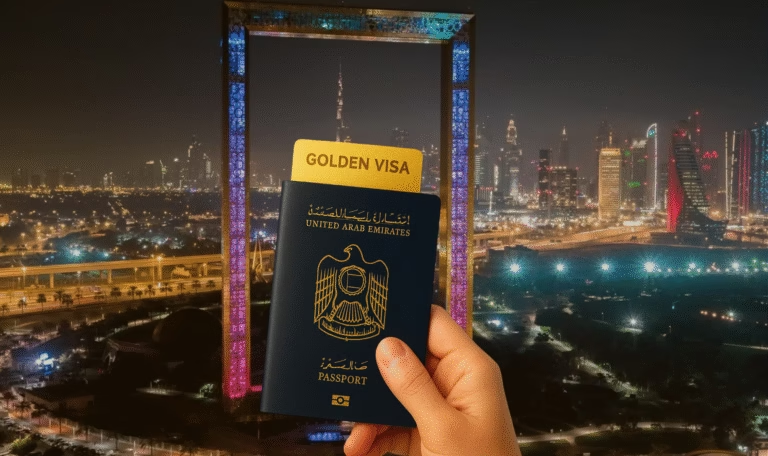
UAE Golden Visa for Entrepreneurs: 2026 Updated Guide
Why Entrepreneurs Are Choosing the UAE Long Term The UAE has become one of the world’s most attractive destinations for entrepreneurs, investors, and startup founders, making the UAE Golden Visa for entrepreneurs one of the most searched residency programs in 2026. Unlike traditional short-term residency options, the Golden Visa provides long-term stability, allowing business owners to live, operate, and scale companies in the UAE with greater confidence and flexibility. Dubai’s rapidly growing economy, tax-efficient environment, and strong global connectivity continue attracting ambitious founders from around the world. The increasing demand for the Dubai Golden Visa for business owners is driven by entrepreneurs seeking operational freedom, family stability, and long-term residency without constant visa renewals. For many founders, the UAE entrepreneur visa is no longer just about residency — it is about building a future within one of the world’s fastest-growing business ecosystems. Understanding the updated Golden Visa UAE requirements and how the program works in 2026 is now essential for entrepreneurs planning long-term business expansion in the region Dubaisetupnow What Is the UAE Golden Visa for Entrepreneurs? The UAE Golden Visa for entrepreneurs is a long-term residency program designed to attract investors, innovators, startup founders, and high-potential business owners to the UAE. The visa typically offers residency validity for up to 10 years, providing greater stability compared to standard renewable residency permits. The program was introduced to strengthen the UAE’s position as a global hub for entrepreneurship, innovation, and investment. The modern UAE entrepreneur visa framework allows eligible founders to live and operate businesses in the UAE while sponsoring family members and accessing long-term residency benefits. As demand for the Dubai Golden Visa for business owners increases, the UAE continues refining the program to attract serious entrepreneurs, technology founders, and high-growth businesses. Understanding the updated Golden Visa UAE requirements is essential for entrepreneurs who want to secure long-term operational and personal stability in Dubai. Dubaisetupnow Who Can Apply for the Golden Visa in 2026? The UAE Golden Visa for entrepreneurs is available to a wide range of founders and business owners, but eligibility depends on the nature and scale of the business activity. Entrepreneurs owning innovative startups, technology companies, scalable SMEs, or government-recognized projects may qualify under different categories. The updated Golden Visa UAE requirements generally focus on innovation, business contribution, financial stability, and growth potential. Startup founders supported by approved incubators or recognized UAE business entities may also become eligible under the entrepreneur category. Many applicants pursuing the Dubai Golden Visa for business owners are founders operating in technology, AI, fintech, healthcare, sustainability, and international trade sectors. The growing popularity of the UAE entrepreneur visa reflects the UAE’s strategy of attracting high-value founders who contribute to long-term economic growth. Dubaisetupnow Key Benefits of the Golden Visa for Entrepreneurs One of the biggest reasons entrepreneurs pursue the UAE Golden Visa for entrepreneurs is the long-term stability it provides. Unlike traditional business visas that require frequent renewals, the Golden Visa allows founders to operate with greater confidence and continuity. The program also provides significant family benefits, allowing entrepreneurs to sponsor spouses, children, and dependents under the same residency framework. This has made the Dubai Golden Visa for business owners highly attractive for founders relocating permanently to the UAE. Another major advantage of the UAE entrepreneur visa is operational flexibility. Entrepreneurs benefit from long-term residency while continuing to build and scale businesses within the UAE ecosystem. The updated Golden Visa UAE requirements are designed to encourage founders who plan for sustainable long-term growth rather than short-term market entry. Dubaisetupnow Why Dubai Is the Preferred Destination for Entrepreneurs Dubai continues to dominate as the preferred location for founders applying for the UAE Golden Visa for entrepreneurs because of its strategic location, investor-friendly ecosystem, and global business connectivity. The demand for the Dubai Golden Visa for business owners has increased significantly as entrepreneurs look for stable jurisdictions with strong infrastructure, low taxation, and access to international markets. Dubai offers all of these advantages while also supporting innovation through free zones, startup hubs, and government-backed initiatives. For founders seeking a long term visa Dubai for entrepreneurs, the city provides something unique — the ability to combine business scalability, personal stability, and international lifestyle benefits within one ecosystem. This is one of the biggest reasons why the UAE entrepreneur visa continues attracting founders from around the world. Dubaisetupnow Business Structure Still Matters for Eligibility Although the UAE Golden Visa for entrepreneurs focuses heavily on innovation and business growth, the way a company is structured still plays a major role in eligibility and operational success. Entrepreneurs applying for the Dubai Golden Visa for business owners should ensure their company structure aligns with compliance standards, banking requirements, and long-term operational goals. Authorities increasingly expect businesses to maintain proper accounting, licensing, and regulatory compliance before granting long-term residency benefits. Understanding the updated Golden Visa UAE requirements also means recognizing the importance of proper company setup. Founders pursuing a long term visa Dubai for entrepreneurs should structure their businesses strategically to support both residency and future scalability. Dubaisetupnow Compliance and Financial Transparency Are More Important in 2026 The UAE’s regulatory environment has become increasingly compliance-focused, which directly impacts the UAE Golden Visa for entrepreneurs process. Authorities now place greater emphasis on operational legitimacy, financial transparency, and proper business activity alignment. Entrepreneurs applying for the UAE entrepreneur visa are expected to maintain organized financial records, proper licensing, and compliant business operations. Businesses operating without proper documentation or regulatory alignment may face difficulties during application reviews. The evolving Golden Visa UAE requirements are designed to attract serious entrepreneurs who contribute positively to the UAE economy. This is why founders seeking the Dubai Golden Visa for business owners should focus not only on eligibility but also on long-term operational compliance and business credibility. Dubaisetupnow Why Entrepreneurs Are Relocating to the UAE Long Term The increasing global demand for the UAE Golden Visa for entrepreneurs reflects a larger shift in how founders choose where to live and operate businesses. Rising taxation, economic uncertainty, and operational instability in many regions have pushed entrepreneurs toward more stable and growth-oriented ecosystems. Dubai offers a combination of tax efficiency, safety, international connectivity, and strong business..
Dubai Mainland vs Free Zone: Which Is Better in 2026?
Choosing the Right Business Structure in Dubai One of the most important decisions entrepreneurs make during company formation is choosing between dubai mainland vs free zone structures. In 2026, this decision has become even more critical because taxation, banking, compliance, scalability, and operational flexibility are now directly connected to the type of company structure you choose. Many founders researching free zone vs mainland dubai often focus only on setup costs or speed, but the reality is much more complex. The right structure depends on your business activity, target market, long-term expansion plans, and operational requirements. Understanding the difference between mainland and freezone dubai is essential before starting a company because the wrong decision can lead to higher costs, operational restrictions, or restructuring later. For entrepreneurs looking for the best business setup in dubai, choosing between a mainland company vs free zone company is no longer just an administrative decision — it is a strategic business decision that directly impacts future growth. Dubaisetupnow What Is a Mainland Company in Dubai? A mainland company is a business licensed by Dubai’s Department of Economy and Tourism (DET), allowing it to operate directly within the UAE market. Entrepreneurs evaluating dubai mainland vs free zone structures often choose mainland setups because of their operational flexibility and unrestricted access to local customers. One major advantage in the ongoing debate of free zone vs mainland dubai is that mainland companies can trade freely across the UAE without needing local distributors. This makes them ideal for businesses targeting retail customers, restaurants, construction, consulting, logistics, and service industries. Understanding the difference between mainland and freezone dubai becomes important here because mainland businesses generally require physical office space and may involve higher operational costs. However, for many entrepreneurs, the scalability and market access offered by a mainland company vs free zone company structure outweigh those costs when seeking the best business setup in dubai. Dubaisetupnow What Is a Free Zone Company? A free zone company is a business established within a designated economic zone designed to encourage foreign investment and international trade. Many entrepreneurs comparing dubai mainland vs free zone structures are attracted to free zones because of simplified setup processes, lower initial costs, and tax-efficient environments. In the discussion of free zone vs mainland dubai, free zones are often preferred by startups, consultants, SaaS companies, trading firms, and international businesses that primarily operate outside the UAE market. They typically allow 100% foreign ownership and offer streamlined licensing procedures. However, understanding the difference between mainland and freezone dubai is important because free zone businesses may face restrictions when dealing directly with the mainland UAE market. Choosing between a mainland company vs free zone company depends heavily on how and where the business intends to operate while pursuing the best business setup in dubai. Dubaisetupnow Market Access – Mainland Has Greater Local Flexibility One of the biggest differences in dubai mainland vs free zone structures is market access. Mainland companies have the advantage of operating directly throughout the UAE without restrictions, making them ideal for businesses targeting local clients and government projects. When comparing free zone vs mainland dubai, this unrestricted market access is often the deciding factor for businesses that need physical operations, direct customer interaction, or large-scale expansion within the UAE. Understanding the difference between mainland and freezone dubai helps entrepreneurs evaluate whether their business model depends on local operations or international transactions. For founders deciding between a mainland company vs free zone company, the ability to trade directly in the UAE market often makes mainland setups the best business setup in dubai for long-term local growth. Dubaisetupnow Cost Differences Between Mainland and Free Zone Cost is another major factor when comparing dubai mainland vs free zone structures. Free zones are often marketed as affordable startup-friendly solutions because they may offer lower initial licensing costs and flexible office options. However, the true comparison of free zone vs mainland dubai depends on long-term operational needs rather than just upfront expenses. Mainland businesses may require physical offices and higher operational costs, but they also provide greater flexibility and unrestricted business activity. Understanding the difference between mainland and freezone dubai helps entrepreneurs avoid choosing structures based only on price. In many cases, the right mainland company vs free zone company decision depends on scalability, compliance, and long-term revenue opportunities rather than initial setup cost alone. For many businesses, the best business setup in dubai is the one that supports future expansion effectively. Dubaisetupnow Taxation and Compliance in 2026 Taxation has become a major consideration in dubai mainland vs free zone decisions after the introduction of UAE corporate tax. While both structures are subject to regulatory compliance, certain free zone businesses may still qualify for favorable tax treatment if they meet qualifying conditions. The debate around free zone vs mainland dubai now includes factors such as corporate tax exposure, compliance obligations, and accounting requirements. Understanding the difference between mainland and freezone dubai is essential because tax positioning now directly impacts profitability and operational efficiency. Businesses choosing between a mainland company vs free zone company must also consider future compliance requirements, reporting obligations, and scalability when evaluating the best business setup in dubai in 2026. Dubaisetupnow Banking and Business Credibility Banking has become another important factor in dubai mainland vs free zone comparisons. UAE banks now conduct stricter compliance checks and evaluate businesses based on structure, activity, and operational transparency. In many free zone vs mainland dubai scenarios, mainland companies may have stronger credibility for businesses dealing directly within the UAE market. However, reputable free zones with strong ecosystems also provide excellent banking support for international businesses. Understanding the difference between mainland and freezone dubai helps founders choose structures aligned with their banking and operational goals. The right mainland company vs free zone company structure can improve financial stability and help secure long-term banking relationships, which is essential for the best business setup in dubai. Dubaisetupnow Which Option Is Better in 2026? The answer to the dubai mainland vs free zone debate depends entirely on the nature of the business. There is no universally “better” option because each structure serves different goals and business models. Entrepreneurs focused on local UAE operations may..
Best Free Zones in UAE for AI Startups in 2026
UAE Is Becoming a Global Hub for AI Startups The UAE is rapidly positioning itself as one of the world’s leading destinations for artificial intelligence and emerging technologies, making the search for the best free zones in UAE for AI startups more relevant than ever in 2026. With strong government support, AI-focused infrastructure, investor-friendly regulations, and large-scale digital transformation initiatives, the UAE has created an environment where AI companies can scale quickly and compete globally. The country’s growing UAE AI startup ecosystem is attracting founders, investors, researchers, and global technology companies from around the world. Entrepreneurs looking for AI startup free zones UAE are no longer just searching for low-cost licenses — they are looking for ecosystems that provide access to talent, funding, innovation hubs, and future-ready infrastructure. Choosing the right jurisdiction has become one of the most important decisions for any founder building an AI-focused company. Dubaisetupnow Why Free Zones Are Ideal for AI Startups Free zones continue to play a major role in supporting innovation and entrepreneurship, which is why many founders are exploring the best free zones in UAE for AI startups before launching their companies. These free zones provide 100% foreign ownership, tax-efficient structures, simplified licensing, and access to modern infrastructure specifically designed for technology businesses. (FreeZoneCompare) For AI businesses, these advantages are especially important because startups often need flexibility, rapid scaling, international operations, and access to investor networks. Many Dubai free zones for AI companies also provide innovation labs, accelerators, and partnerships with global tech firms, making them more than just licensing authorities. The rapidly expanding UAE AI startup ecosystem is heavily supported by these specialized zones, helping founders build globally competitive AI businesses. Dubaisetupnow Dubai Internet City (DIC) – Best for AI Software and SaaS Startups Dubai Internet City is widely considered one of the best free zones in UAE for AI startups, particularly for companies focused on software, machine learning, cloud solutions, and SaaS platforms. The ecosystem is home to major global technology companies including Microsoft, Oracle, and IBM, creating a highly collaborative environment for startups. (IncHub) Among all Dubai free zones for AI companies, DIC stands out because of its strong networking ecosystem, access to enterprise clients, and alignment with Dubai’s broader AI strategy. Founders searching for the best free zone for tech startups in UAE often choose DIC because it combines credibility, infrastructure, and investor exposure in one location. Its position within the growing UAE AI startup ecosystem makes it ideal for startups looking to scale internationally. Dubaisetupnow Dubai Silicon Oasis (DSO) – Best for AI, Robotics, and Deep Tech Dubai Silicon Oasis is another strong contender among the best free zones in UAE for AI startups, especially for companies working on robotics, IoT, machine vision, and hardware-integrated AI systems. Unlike traditional business zones, DSO was built specifically as a technology-focused ecosystem with infrastructure designed for innovation and R&D. (IncHub) Many founders looking for AI startup free zones UAE choose DSO because it provides affordable setup costs alongside advanced infrastructure and innovation support. It is widely regarded as one of the best free zone for tech startups in UAE because of its strong focus on research, prototyping, and technical collaboration. As the UAE AI startup ecosystem expands, DSO continues attracting startups focused on next-generation technologies and deep-tech innovation. Dubaisetupnow ADGM & Hub71 – Best for AI FinTech and Investor Access Abu Dhabi Global Market and Hub71 are among the most advanced ecosystems for AI and fintech innovation in the region. Hub71+ AI specifically supports startups working on AI-driven products by providing access to investors, corporate partners, technical resources, and government-backed programs. (Hub71) For founders searching for the best free zones in UAE for AI startups, ADGM offers a unique advantage because of its strong regulatory framework and investor ecosystem. It is particularly attractive for AI startups focused on finance, compliance, data analytics, and regulatory technology. Among all Dubai free zones for AI companies, ADGM and Hub71 stand out for their venture capital access and international credibility. This makes them a critical part of the broader UAE AI startup ecosystem. Dubaisetupnow DMCC – Best for AI Trading, Blockchain, and Data Platforms DMCC has evolved into one of the strongest ecosystems for technology and innovation, making it one of the best free zones in UAE for AI startups focused on blockchain, fintech, data marketplaces, and AI-driven analytics platforms. Its global reputation and strong banking ecosystem make it highly attractive for scaling technology companies. (Arnifi) Among the leading Dubai free zones for AI companies, DMCC stands out because of its international business environment and strong investor connectivity. Founders searching for the best free zone for tech startups in UAE often consider DMCC because it combines global credibility with operational flexibility. As the UAE AI startup ecosystem continues expanding, DMCC is increasingly becoming a preferred hub for AI businesses operating in finance and data-driven sectors. Dubaisetupnow Meydan Free Zone – Best for Early-Stage AI Startups Meydan Free Zone has become increasingly popular among entrepreneurs looking for affordable and flexible AI startup free zones UAE options. The free zone is particularly attractive for early-stage founders launching AI SaaS businesses, digital platforms, and cloud-based startups. (Arnifi) Many startups searching for the best free zones in UAE for AI startups choose Meydan because it offers a digital-first setup process, lower operational costs, and quick company formation. While it may not have the same enterprise ecosystem as DIC or ADGM, it remains one of the best free zone for tech startups in UAE for founders looking to bootstrap and scale gradually within the growing UAE AI startup ecosystem Dubaisetupnow Choosing the Right Free Zone Matters More Than Ever Selecting the right jurisdiction is one of the most important decisions when evaluating the best free zones in UAE for AI startups. Different free zones are designed for different business models, industries, and stages of growth. Some are better suited for AI software companies, while others specialize in deep-tech, fintech, or investor-driven ecosystems. Entrepreneurs comparing AI startup free zones UAE should evaluate factors such as banking support, investor access, licensing flexibility, operational costs, and scalability. The strongest Dubai..
Business Setup in Dubai 2026: New Rules Every Founder Must Know
Dubai’s Business Environment Is Evolving Dubai continues to attract entrepreneurs, startups, and multinational companies from across the world, making business setup in dubai 2026 one of the most searched topics among global founders. The city remains one of the easiest and most profitable places to launch a company, but the regulatory environment has evolved significantly in recent years. Entrepreneurs planning to start business in dubai 2026 must understand that the system is now more compliance-driven, transparent, and globally aligned than before. The introduction of corporate tax, stronger AML procedures, and stricter banking standards has changed the way businesses operate in the UAE. These new business rules in dubai are not designed to discourage entrepreneurs — they are intended to create a stronger and more sustainable business ecosystem. Understanding the latest dubai business regulations 2026 is now essential for anyone planning a successful dubai company setup 2026. Dubaisetupnow Corporate Tax Is Reshaping Business Setup One of the biggest changes impacting business setup in dubai 2026 is the full implementation of UAE corporate tax. While Dubai still offers one of the most tax-efficient systems globally, businesses must now carefully structure their operations to avoid unnecessary tax exposure. Entrepreneurs planning dubai company setup 2026 can no longer rely on outdated assumptions that every business automatically enjoys zero tax. The latest dubai business regulations 2026 require businesses to maintain proper accounting records, submit corporate tax filings, and comply with reporting standards. These new business rules in dubai have made tax planning an important part of company formation strategy. Founders looking to start business in dubai 2026 must now think about taxation from the very beginning rather than treating it as an afterthought. Dubaisetupnow Free Zone Companies Are No Longer “Automatically Tax-Free” Many entrepreneurs still assume that free zone businesses automatically enjoy zero tax, but this is one of the biggest misconceptions surrounding business setup in dubai 2026. Free zones can still offer major advantages, but businesses must now meet qualifying conditions and compliance standards to maintain those benefits. The updated dubai business regulations 2026 require free zone companies to maintain proper substance, accounting records, and operational compliance. These new business rules in dubai have made structuring more important than ever. Businesses planning dubai company setup 2026 through free zones must now ensure that their operations align with regulatory expectations if they want to preserve tax efficiency while they start business in dubai 2026. Dubaisetupnow Banking Has Become More Compliance-Focused Corporate banking is now one of the most important aspects of business setup in dubai 2026. UAE banks have significantly increased compliance checks and now expect businesses to provide detailed documentation before approving accounts. Entrepreneurs planning to start business in dubai 2026 must prepare clear business models, transparent ownership structures, and documented source-of-funds information. These new business rules in dubai have made banking strategy a core part of company formation. Businesses that fail to align with the latest dubai business regulations 2026 often face delays, rejections, or restricted banking access. A successful dubai company setup 2026 now depends not only on licensing but also on proper financial and compliance planning from day one. Dubaisetupnow Mainland vs Free Zone Decisions Matter More Than Ever Choosing the right jurisdiction has become one of the most critical decisions in business setup in dubai 2026. Entrepreneurs can no longer select a structure based only on cost or speed, because the choice between mainland and free zone now directly affects taxation, banking, scalability, and operational flexibility. The latest dubai business regulations 2026 have increased the importance of strategic structuring. Businesses that want to operate locally within the UAE market may benefit more from mainland structures, while international businesses may still prefer free zones. Understanding these new business rules in dubai allows entrepreneurs to make smarter decisions during their dubai company setup 2026 journey. Dubaisetupnow Compliance Is No Longer Optional In the past, many small businesses ignored compliance until issues appeared later. However, business setup in dubai 2026 now requires a proactive approach toward accounting, tax filings, AML procedures, and regulatory reporting. The UAE government has strengthened dubai business regulations 2026 to improve transparency and global credibility. These new business rules in dubai are designed to attract serious businesses while reducing financial risk within the ecosystem. Entrepreneurs planning to start business in dubai 2026 must understand that compliance is no longer just administrative paperwork — it is part of long-term business survival. Dubaisetupnow Digital Transformation Is Changing Business Operations Dubai is rapidly moving toward a more digitally integrated economy, and this shift is influencing business setup in dubai 2026 in major ways. Businesses are increasingly expected to maintain digital accounting systems, organized reporting structures, and transparent financial records. These evolving dubai business regulations 2026 are pushing companies toward automation and real-time compliance systems. Entrepreneurs planning dubai company setup 2026 should begin preparing for a future where digital processes become mandatory across licensing, taxation, and financial reporting. Businesses that adapt early to these new business rules in dubai will have a significant competitive advantage. Dubaisetupnow Structuring Your Business Correctly Is More Important Than Ever A successful business setup in dubai 2026 is no longer just about obtaining a license quickly. The way a business is structured now affects taxation, operational flexibility, investor confidence, and future scalability. The latest dubai business regulations 2026 reward businesses that are properly planned and professionally structured. Entrepreneurs who simply focus on the cheapest setup option often face problems later with banking, tax exposure, or compliance obligations. Understanding these new business rules in dubai allows founders to create stronger foundations as they start business in dubai 2026. Dubaisetupnow Why Choose DubaiSetupNow At DubaiSetupNow, we help entrepreneurs navigate the changing reality of business setup in dubai 2026 with clarity and confidence. Our approach goes beyond basic licensing and focuses on building businesses that are compliant, scalable, and future-ready. We guide founders through every stage of dubai company setup 2026, including structuring, compliance planning, corporate tax positioning, and banking preparation. By staying updated with the latest dubai business regulations 2026, we help businesses adapt to the new business rules in dubai while ensuring long-term operational stability. Dubaisetupnow Final Thought Dubai in 2026 remains one of the most attractive places in the..
