

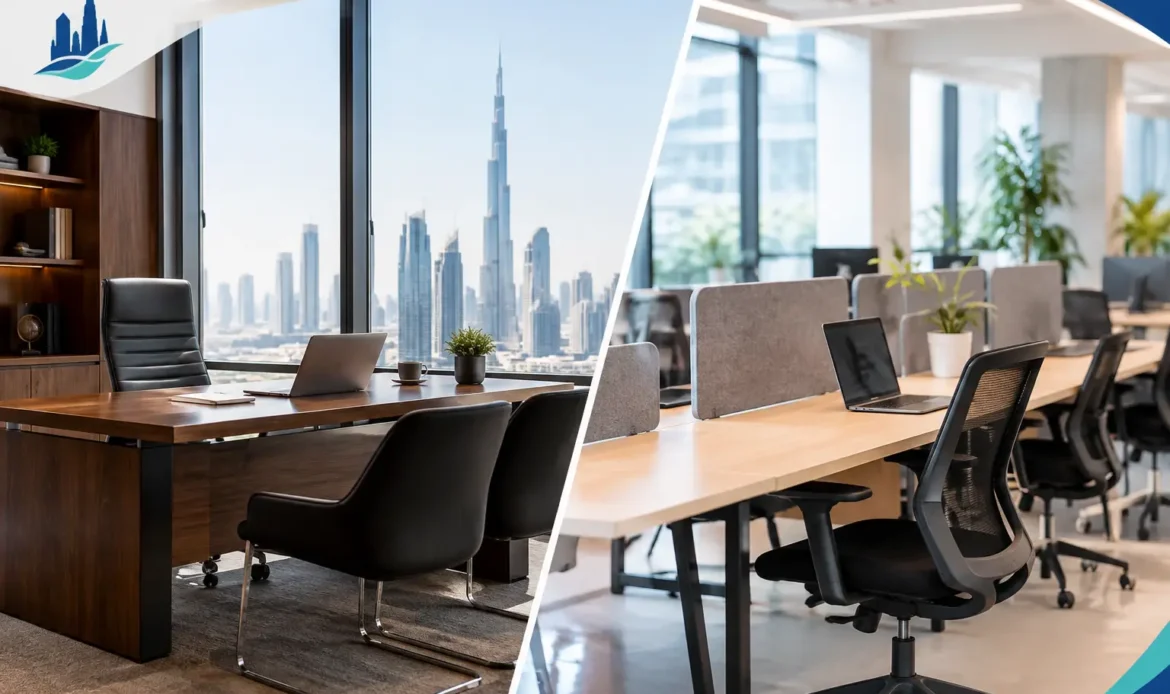
A workspace decision can shape far more than your monthly overhead. In a mainland office versus flexi desk comparison, the real question is whether your UAE business needs a dedicated operating base or a cost-efficient address designed for a lean launch. The right answer affects your license pathway, visa capacity, client perception, banking preparation, and room to scale.
For many founders, the comparison is also slightly misleading. A mainland office and a flexi desk are often connected to different company structures. A mainland company may need a physical office arrangement that meets Dubai licensing and tenancy requirements, while a flexi desk is most commonly offered through a free zone package. Understanding that distinction early prevents a low-cost setup choice from creating operational limits later.
What a Mainland Office Means in Dubai
A mainland office is a registered business premises used by a company licensed to operate in the UAE mainland. Depending on the business activity, legal structure, and licensing authority requirements, this can be a conventional private office, a serviced office, or an approved business center solution.
The defining feature is not the furniture or square footage. It is that the premises supports a mainland license and is documented through the appropriate tenancy registration process, such as Ejari in Dubai where applicable. This gives the business a recognized physical base for regulatory, commercial, and administrative purposes.
A mainland structure is often suitable for companies that intend to trade directly with customers across the UAE, bid for local contracts, open a retail or service location, hire a growing team, or require more flexibility in where and how they operate. Mainland companies can also serve international clients, but their advantage is direct access to the local UAE market without relying on a distributor or a separate mainland arrangement.
Office requirements are not identical for every mainland business. A professional consultancy with a small team has different space needs from a logistics company, clinic, restaurant, or retail operation. Some activities require specific approvals or premises standards, while others can begin with a more modest serviced-office arrangement. The key is matching the office to the approved activity rather than choosing space based on price alone.
What Is a Flexi Desk?
A flexi desk is a shared workstation or hot-desk arrangement, usually provided by a UAE free zone. It gives a business an official address and limited access to a shared workspace, often with meeting-room access available by booking. It is designed for entrepreneurs who do not need a permanent private office.
For freelancers, online service providers, early-stage consultants, and international founders testing the market, a flexi desk can reduce startup costs substantially. Instead of committing to a year-long private office lease, the business pays for an approved workspace package bundled with its free zone license.
That affordability comes with practical limits. A flexi desk is not usually intended for daily use by a full team, inventory storage, customer walk-ins, or operations that require dedicated facilities. It may also provide limited visa eligibility. The number of visas available can vary by free zone, package, activity, and the office solution selected, so it should never be assumed from the advertised license price.
Mainland Office Versus Flexi Desk: The Key Differences
The most meaningful difference is the company structure each option typically supports. A mainland office is generally linked to a mainland business license. A flexi desk is generally linked to a free zone company license. Since mainland and free zone businesses have different operating frameworks, this is a strategic choice before it is a workspace choice.
Market access and business activity
If your business needs to sell goods or services directly throughout the UAE mainland, a mainland setup is often the clearer route. It can support direct local commercial activity, subject to the company’s license and approvals. This matters for businesses serving UAE consumers, working with local corporate clients, operating shops, or providing on-site services.
A free zone company with a flexi desk is often ideal for international trade, remote services, consulting, digital businesses, and activity conducted within the free zone framework. However, the ability to conduct business in the mainland can depend on the activity, the client relationship, customs arrangements, and any additional approvals or structures required. Founders should not treat a flexi desk package as a universal permit to operate anywhere in the UAE.
Cost and commitment
A flexi desk usually has the lower initial cost. It suits founders who want an official UAE presence while preserving cash for marketing, product development, talent, or market validation. It can be particularly practical when the company is operated by one person or a small remote team.
A mainland office normally involves higher annual costs because it may include rent, tenancy registration, fit-out, utilities, deposits, and business-center fees. Yet a higher office spend can be commercially justified if it enables local revenue, supports more visas, meets a client’s vendor requirements, or gives the company capacity to expand without restructuring too soon.
The cheapest option is not always the most economical. A founder who chooses a flexi desk and later needs a mainland operational presence may face additional setup work, time, and costs. Conversely, a solo digital consultant may waste capital on a large mainland office that does not add meaningful value to the business model.
Visas and staffing
Visa planning should be part of the office decision from day one. Flexi desk packages may offer eligibility for a limited number of residence visas, and some entry-level packages may not include visa allocation at all. The exact allowance depends on the issuing free zone and the package terms.
A mainland office can offer more room for employee visa planning, but allocation is often connected to the size and type of office and may be subject to immigration approvals. A company expecting to recruit several employees should assess its workspace and visa needs together. Waiting until the team is ready to join can create avoidable delays.
Credibility, privacy, and operations
A dedicated mainland office can be valuable when clients expect formal meetings, confidential discussions, a visible Dubai presence, or a stable location for staff. It offers greater privacy and control over the work environment. For regulated, client-facing, or team-based businesses, this can be a practical operational advantage rather than simply a branding decision.
A flexi desk still provides a legitimate registered address, but it may not create the same experience for visitors or employees. It works best when the business is remote-first and meetings are occasional. If your sales process depends on regularly welcoming clients into your own space, a private office is generally the stronger choice.
When a Flexi Desk Is the Better Fit
A flexi desk can be a smart starting point if you are launching a freelance practice, digital agency, e-commerce support business, consulting company, or international trading operation with a small physical footprint. It is also suitable for founders who need one UAE residence visa, want to establish a company quickly, and do not expect immediate local staffing or a customer-facing location.
It works particularly well when your revenue is not dependent on a large local office. A software founder serving overseas clients, for example, may benefit more from a lean free zone setup and a flexi desk than from committing capital to premises that remain mostly unused.
Before proceeding, confirm the activity is available in the selected free zone, the package supports the visa requirement, and the free zone’s rules align with the way you will serve UAE-based clients. These details matter more than a headline package price.
When a Mainland Office Is the Better Fit
A mainland office is usually the stronger choice for companies targeting direct UAE market access, local contracts, physical operations, or a growing employee base. It can also be appropriate for businesses whose activity requires an approved location, inspections, equipment, storage, or a customer-facing facility.
Choose this route when the office supports a clear commercial need. For example, a local services company may need a Dubai base to dispatch staff and meet customers. A trading company may need space aligned with its warehouse or distribution model. A professional firm pursuing corporate accounts may benefit from a dedicated address and meeting environment.
There are also middle-ground solutions. An approved serviced office or business center can give a mainland company a professional setting without the cost and responsibility of fitting out a conventional office. The availability and suitability of this option depend on the license activity and current authority requirements.
Make the Workspace Decision After the Business Model
Start with where your customers are, how you will deliver your product or service, how many visas you need, and whether employees must work from a fixed location. Then select the jurisdiction and workspace package that supports those facts. Reversing the process – choosing the lowest-cost desk first and designing the business around it later – can limit your options.
DubaiSetupNow helps founders assess licensing, workspace, visa, and compliance requirements as one connected setup plan. A well-matched office solution does more than satisfy a licensing condition. It gives your business enough structure to launch confidently and enough flexibility to grow when the market responds.
Set Up Your Dubai Business Today
Contact DubaiSetupNow for a free consultation and personalized cost estimate.
