

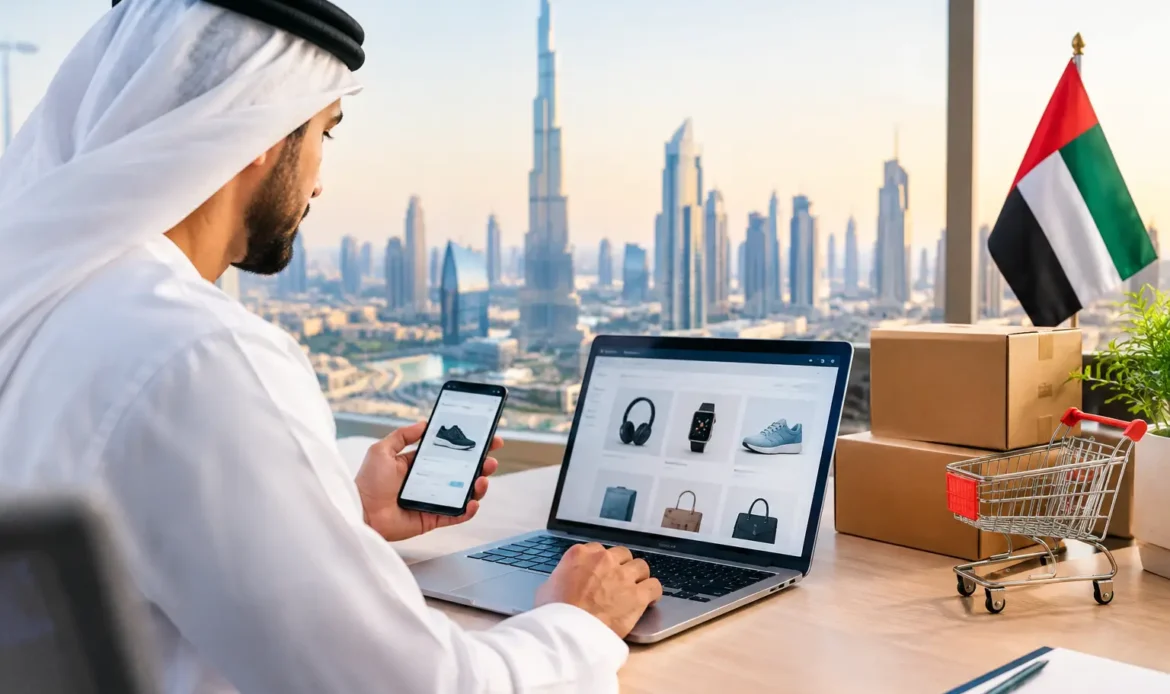
A store can go live in a day. Operating it legally in the UAE requires more deliberate decisions. UAE e-commerce licensing trends are being shaped by faster digital business formation, more specialized activity options, stricter compliance expectations, and founders who want the freedom to sell across channels without restructuring too soon.
For international entrepreneurs, the central question is no longer simply whether to get an e-commerce license. It is which legal structure, business activity, operational model, and support services will allow the business to sell, collect payments, import products, hire staff, and grow with minimal disruption.
E-Commerce Licensing Is Becoming More Specific
The UAE has moved well beyond the broad idea of an “online business license.” Free Zones and Mainland authorities now commonly distinguish between activities such as online retail, marketplace operations, social media commerce, web portal services, digital marketing, IT services, and trading in defined product categories.
That shift matters because the activity printed on a license should reflect how revenue is actually earned. A founder operating a Shopify store that sells physical products has different requirements from a business that builds a multi-vendor marketplace, manages third-party fulfillment, or earns commission from online listings. Selecting a general activity because it appears cheaper can create problems later when opening a corporate bank account, registering for tax, signing a supplier agreement, or applying for approvals.
The practical trend is toward licensing for the real operating model, not just the website. Before incorporation, founders should map the transaction flow: what is sold, where goods are held, who invoices the customer, where payments settle, and whether the company imports, exports, or delivers goods locally.
Free Zone Versus Mainland Is Still the Core Decision
Free Zone company formation remains highly attractive for e-commerce founders because it can offer full foreign ownership, a streamlined setup process, flexible office solutions, and access to business communities built around digital trade, logistics, media, technology, and international commerce. For a company selling to customers outside the UAE, holding stock through a suitable fulfillment arrangement, or operating primarily as a digital service provider, a Free Zone structure can be an efficient starting point.
Mainland licensing is increasingly relevant for businesses that want to trade directly in the UAE market, maintain a local retail or warehouse presence, work closely with domestic distributors, or pursue government and corporate opportunities. The old assumption that Mainland means less ownership control is outdated in many activities. Foreign investors can now hold 100% ownership in a wide range of Mainland businesses, subject to the selected activity and applicable requirements.
There is no automatic winner. A Free Zone license may be the right answer for a lean, cross-border brand. A Mainland license may better support a business that expects substantial UAE sales and local operational activity. The right choice depends on the commercial plan, not the marketing promise attached to a particular jurisdiction.
The “Sell Anywhere” Assumption Needs Careful Review
One of the most common sources of confusion is the belief that any UAE e-commerce license gives unrestricted access to every sales channel and customer segment. In reality, the ability to sell into the UAE, hold inventory, use third-party warehouses, import products, or deliver directly to consumers can depend on the jurisdiction, activity, customs arrangements, product type, and fulfillment model.
A Free Zone company can be an excellent vehicle for international commerce, but local distribution may require additional planning. A Mainland entity may simplify certain domestic trade arrangements, while also bringing different office, immigration, and compliance considerations. Founders should assess their target markets before selecting a package based only on its first-year price.
Marketplace Selling Is Driving New Licensing Questions
Amazon, noon, social commerce platforms, direct-to-consumer websites, and B2B procurement portals have made it easier to reach customers without opening a physical shop. They have also made licensing decisions more visible. Marketplaces, payment service providers, logistics partners, and banks often ask for documents that align clearly with the company’s activities.
A seller registering on a marketplace should expect to provide a trade license, corporate formation documents, identity documents, bank details, and, in some cases, proof of brand ownership or authorization to sell specific goods. Inconsistent details between the license activity, website, invoices, and banking profile can delay onboarding.
This is why UAE e-commerce licensing trends favor a more coordinated setup approach. Licensing should not be treated as a standalone document. It should be planned alongside the trade name, website terms, payment setup, product sourcing, customs process, VAT position, and banking narrative.
Product Categories Are Receiving More Attention
Not every product can be sold online under the same approvals. Cosmetics, food, supplements, medical products, electronics, children’s products, precious metals, and regulated financial or digital services may involve additional rules before goods are imported, marketed, or sold in the UAE.
The commercial opportunity can be strong, but compliance should be confirmed before stock is ordered. A skincare brand, for example, may need product registrations and compliant labeling. A food seller may face authority approvals, storage requirements, and temperature-control obligations. A business selling regulated electronic devices may need to consider product conformity and import documentation.
The key trade-off is simple: specialized products may offer stronger margins and less competition, but they usually require more planning. A general e-commerce license is not a substitute for product-specific approvals.
Tax and Record-Keeping Are Becoming Part of Setup Planning
Digital businesses often start small, then scale quickly through paid advertising, marketplace demand, or viral social content. That growth can bring VAT registration obligations once the applicable threshold is reached, along with more complex accounting across refunds, marketplace fees, shipping charges, discounts, inventory, and cross-border sales.
Corporate tax has also made bookkeeping a core operational requirement rather than an afterthought. The tax treatment of a UAE e-commerce business can depend on its legal structure, income, expenses, Free Zone status, qualifying activity considerations, and the way it trades with customers and counterparties. A company should not assume that a Free Zone license automatically results in a zero-tax outcome.
Accurate records, invoices, expense documentation, and sales reports are essential from the beginning. This is particularly important for merchants using multiple channels, because direct website revenue, marketplace settlements, cash-on-delivery transactions, and international payments may not appear in one place.
Banking Readiness Is Influencing License Choices
A fast license issuance timeline is valuable, but the business cannot operate effectively without a workable banking solution. Banks and financial institutions assess the substance of the business, including the founder’s profile, product category, supplier information, website, projected turnover, source of funds, and geographic markets.
For this reason, a license should support a credible banking story. A company that states it provides digital consultancy but actually intends to import consumer goods and sell through marketplaces may face avoidable questions. Clear business activity selection and professionally prepared supporting documents improve the quality of the application.
Founders should also understand that account approval is never guaranteed. It depends on the institution’s internal policies and due diligence. The best preparation is a transparent commercial profile, not an unrealistic promise of instant banking.
Flexible Workspaces Are Replacing One-Size-Fits-All Offices
Many online businesses do not need a large office on day one. Free Zones have responded with flexi-desk, shared workspace, and virtual office options that can help early-stage companies meet licensing requirements while keeping fixed costs controlled.
However, the lowest-cost workspace may not always match future visa needs, banking expectations, warehouse operations, or team growth. Businesses planning to sponsor employees, receive clients, store samples, or establish stronger operational substance may benefit from a more suitable office arrangement from the outset.
The trend is not simply toward cheaper setups. It is toward setups that can expand without forcing an immediate license amendment, office move, or jurisdiction change.
What Founders Should Decide Before Applying
The strongest e-commerce setups begin with commercial clarity. Before applying, define the products or services, customer locations, sales channels, inventory location, expected visa requirements, and whether the company will import or distribute goods in the UAE. Those answers guide the jurisdiction and activity selection far better than a generic online business package.
It is also wise to budget beyond the license fee. Include immigration costs, establishment card requirements, office arrangements, product approvals, customs needs, accounting, VAT support, website compliance, insurance where relevant, and renewal costs. A lower initial quote can become expensive if it excludes the operational elements the business needs next.
DubaiSetupNow helps founders assess these moving parts before formation, so the selected license supports both the launch plan and the next stage of growth.
A well-chosen UAE e-commerce license should give your business room to sell with confidence, not leave you correcting foundational decisions after your first major order.
Quick Answers
Set Up Your Dubai Business Today
Contact DubaiSetupNow for a free consultation and personalized cost estimate.
