

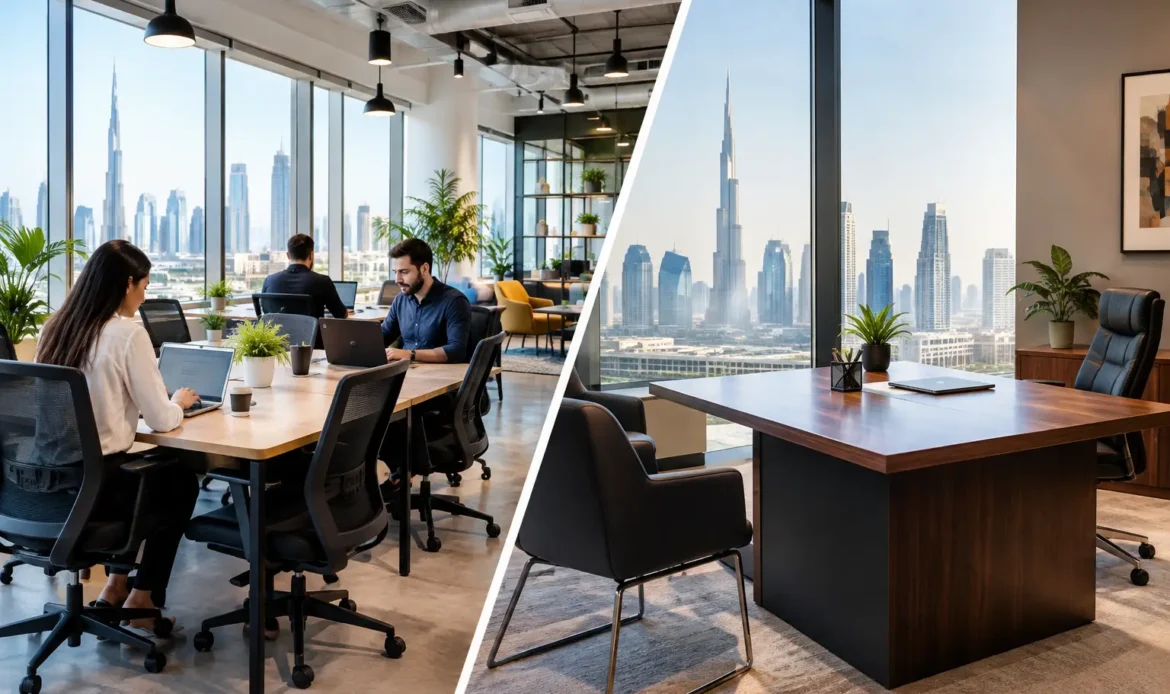
A workspace choice can affect far more than where you answer emails. In Dubai, the shared desk versus private office decision can influence your business license package, visa eligibility, banking readiness, credibility with clients, and monthly operating costs. The right answer depends on how your business will operate now, not simply on the lowest advertised setup price.
For a solo consultant registering a lean Free Zone business, a shared desk may be the most efficient route to legal establishment. For a trading company handling stock, a consultancy with confidential client meetings, or a growing team, a private office can prevent expensive changes later. The key is to match your office solution to your jurisdiction, activity, staffing plan, and commercial priorities.
Shared Desk Versus Private Office: The Core Difference
A shared desk, often called a flexi-desk or hot desk, gives a business access to a communal workspace rather than a dedicated enclosed room. It is commonly offered within business centers and Free Zones as part of a license package. You may receive a business address, access to shared facilities, and limited use of meeting rooms or workstations under the provider’s terms.
A private office is a dedicated, lockable workspace assigned to one company. It offers greater privacy, a more consistent physical presence, and room for employees, equipment, files, and client meetings. Private offices range from compact serviced offices to conventional leased premises, depending on the location and licensing authority.
Neither option is automatically better. A shared desk is built for efficiency and a private office is built for control and capacity. Choosing between them requires looking beyond the rent figure.
When a Shared Desk Makes Commercial Sense
A shared desk is often suitable for founders who primarily work remotely, travel frequently, or need a UAE legal entity without operating from a full-time physical location. This is particularly common among freelancers, digital service providers, online business owners, holding companies, and early-stage consultants.
The main benefit is cost control. A flexi-desk package can reduce the upfront commitment associated with leasing and furnishing a dedicated office. It also gives a new company a registered business address and, where permitted by the relevant authority, a basis for completing licensing and immigration steps.
Speed matters as well. When workspace is included within a Free Zone package, the setup process can be more straightforward than sourcing a separate commercial unit. For entrepreneurs testing the UAE market, this can preserve capital for sales, recruitment, product development, and market entry activity.
However, a shared desk should not be treated as a universal solution. Access hours, workstation availability, meeting-room allowances, visitor policies, and mail handling vary by provider. More importantly, visa quotas and permitted business activities are tied to the specific license and facility package. A flexi-desk may support one visa, no visas, or a limited allocation depending on the jurisdiction and package selected.
A shared environment can also be a poor fit where confidential calls, regulated records, product samples, or frequent client visits are part of daily operations. Saving on workspace is useful only if the arrangement still allows the business to work professionally.
When a Private Office Is the Better Investment
A private office is usually the stronger choice when your company needs regular in-person operations. It creates a secure place for staff, documents, technology, inventory samples, and face-to-face meetings. For established SMEs and corporate expansion teams, it also signals that the business has a committed local operating base.
Privacy is a practical advantage, not just a comfort feature. Legal advisers, financial consultants, recruitment firms, agencies handling client data, and companies managing commercially sensitive discussions may need an enclosed setting to operate responsibly. A dedicated office also makes it easier to establish internal processes, receive visitors, and build a consistent team culture.
The visa position can be a deciding factor. In many UAE jurisdictions, a larger office facility can support a higher visa allocation, subject to authority rules and eligibility requirements. If you expect to hire sales staff, managers, technical employees, or support personnel within the next year, selecting adequate office capacity early may be more efficient than repeatedly changing packages.
Private offices are not limited to large organizations. A small two-person office can be the right option for a founder and manager who meet clients regularly. The question is whether the additional monthly commitment produces a business benefit through privacy, employee capacity, stronger presentation, or operational convenience.
Licensing, Jurisdiction, and Visa Capacity Come First
Office selection in the UAE cannot be separated from company formation strategy. Free Zone, Mainland, and certain specialized jurisdictions have different facility requirements, activity approvals, and visa frameworks. A workspace that works for a media freelancer in one Free Zone may not meet the needs of a Mainland professional services firm or a trading business with warehouse requirements.
Before selecting a shared desk or private office, clarify the business activity on your license. Some activities can operate from a flexi-desk arrangement, while others require a physical office, external approvals, storage space, or a specific type of premises. Businesses involved in retail, food, healthcare, manufacturing, logistics, education, and regulated financial activities should expect more detailed requirements than a remote consultancy.
You should also plan for visas before signing an office agreement. Do not assume that every business address automatically provides a visa quota. Confirm how many visas the proposed license and facility can support, what conditions apply, and whether future upgrades are available. The cost of moving from a shared package to a private office later may include license amendments, immigration updates, deposits, fit-out expenses, and operational disruption.
For Mainland businesses, the tenancy arrangement and registration requirements can have a direct role in licensing and immigration processes. For Free Zone companies, the authority’s approved facility options and package rules will guide the decision. This is why comparing office prices without comparing the full setup structure can lead to the wrong result.
Compare the Real Cost, Not the Starting Price
The lowest workspace quote rarely reflects the total operating cost. A shared desk may appear inexpensive but carry additional charges for meeting rooms, printing, courier handling, extra access, visa processing, or upgrades. A private office may have a higher monthly fee but include reception support, utilities, internet, cleaning, meeting rooms, and a stronger visa capacity.
Review the commercial terms carefully. Check the contract length, renewal terms, security deposit, notice period, payment schedule, parking availability, fit-out responsibility, and whether the quoted price includes government-related fees. If client access is central to your business, assess the building location, reception experience, meeting facilities, and ease of travel from airports, Metro stations, and major commercial districts.
A practical comparison should also include the cost of lost time. If a small shared-desk package forces a team to work from home, pay for external meeting rooms, and relocate within six months, it may not be the most economical choice. Conversely, a premium private office can drain capital unnecessarily if the company has no local employees or visitor requirement.
A Simple Decision Framework for Founders
Choose a shared desk when you are launching with a lean structure, work remotely, have limited or no immediate staffing needs, and your chosen jurisdiction confirms that the package supports your intended activity and visa plan. It is a sensible starting point for businesses that need legal presence and professional support without carrying an oversized overhead.
Choose a private office when your work depends on privacy, regular meetings, local staff, a higher visa requirement, or a visible operational base. It is also the safer route when you know your company will expand shortly and want to avoid repeated amendments.
If you are uncertain, build your decision around the next 12 months rather than the first 30 days. Consider expected hires, client meeting frequency, document sensitivity, storage needs, and the likelihood of visa applications. That approach produces a workspace plan that supports growth instead of creating an early constraint.
Get the Office Choice Aligned With Your Setup Plan
The office should support your business model, not dictate it. A well-chosen shared desk can keep a new UAE company light and efficient. A properly sized private office can give an expanding business the space, credibility, and visa capacity it needs to operate with confidence.
DubaiSetupNow can help evaluate the practical fit between your activity, preferred jurisdiction, license package, visa plan, and office requirement before you commit. Getting those elements aligned at the start gives you a cleaner path to launch, operate, and expand your UAE business with confidence.
Quick Answers
Set Up Your Dubai Business Today
Contact DubaiSetupNow for a free consultation and personalized cost estimate.
